Turn on cookies to sign in
Signing in saves your progress to your Curie account. We can only do that with cookies on — turn them on to continue.
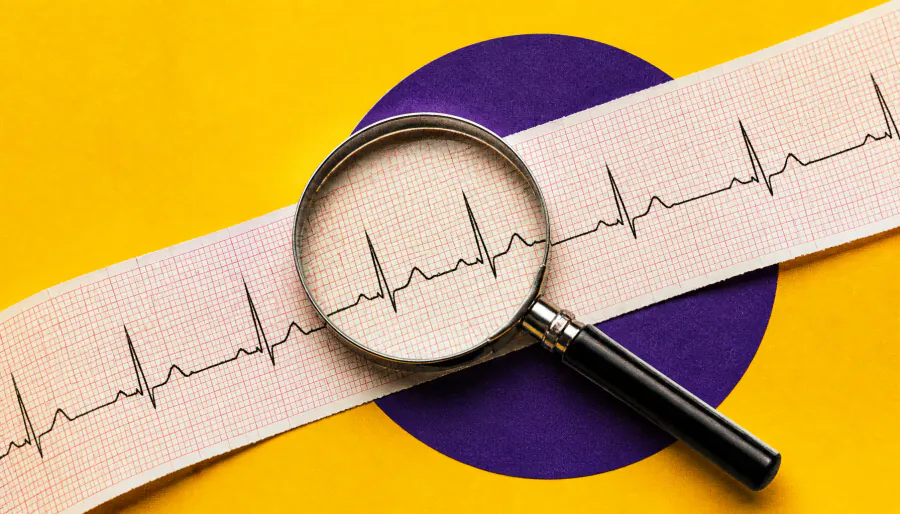
Your EKG might hold a life-saving secret. UC Berkeley researchers trained an AI on over 440,000 EKGs and discovered a hidden electrical pattern that predicts sudden cardiac death better than current screening methods. The algorithm — validated across populations in the U.S., Sweden, and Taiwan — could help identify thousands of at-risk patients who would otherwise fly under the radar.
Your EKG might hold a life-saving secret
UC Berkeley scientists have used artificial intelligence to uncover a previously undetected warning signal buried in routine electrocardiograms (EKGs) — one that could predict sudden cardiac death before it strikes. Trained on more than 440,000 EKGs from Sweden and validated against patient data from the U.S. and Taiwan, the AI system identified subtle electrical patterns linked to fatal cardiac events that conventional screening methods consistently miss. The findings were published in Nature.
The stakes are enormous: over 300,000 Americans die from sudden cardiac arrest each year, and roughly 90% of out-of-hospital cases are fatal. Current screening relies heavily on measuring how much blood the heart pumps per beat — a method that misses many at-risk individuals and leads to unnecessary defibrillator implants in others. The research team is already working with hospital systems in Sweden, Taiwan, and the U.S. to integrate the algorithm into existing EKG workflows, potentially flagging high-risk patients for further monitoring.
By the Numbers
Why it matters: This AI tool could reshape how cardiologists identify who truly needs a defibrillator — reducing both preventable deaths and unnecessary procedures — using technology already embedded in routine care.