Turn on cookies to sign in
Signing in saves your progress to your Curie account. We can only do that with cookies on — turn them on to continue.
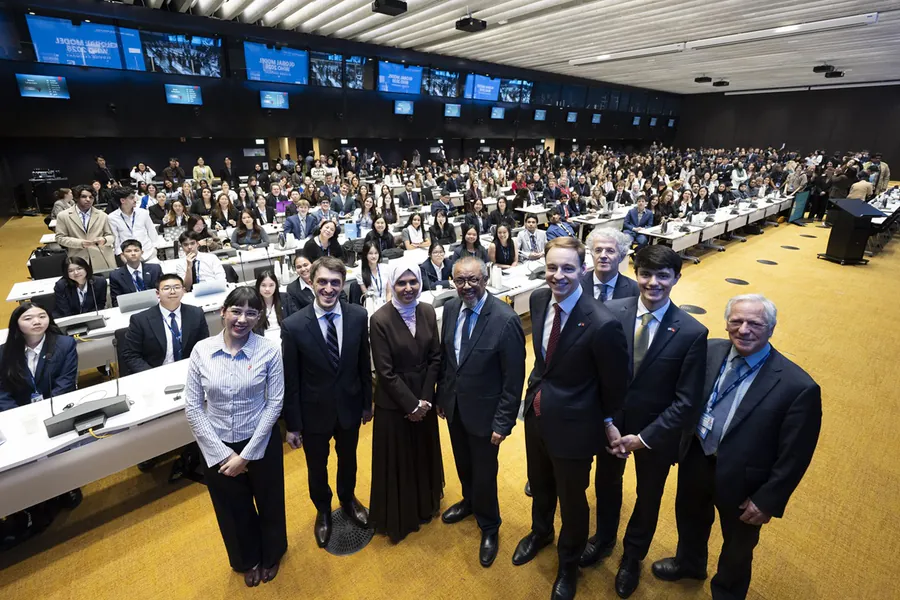
Over 400 young leaders from 50+ countries gathered at WHO headquarters in Geneva and adopted a landmark Youth Declaration on Plastics and Health. The declaration calls for binding health obligations in a global plastics treaty, noting that plastic particles have already been found in human blood, brain tissue, and amniotic fluid. Their message to negotiators: put health in the treaty.
At the fourth Global Model WHO, held November 10–13, 2026 in Geneva, more than 400 youth delegates from over 50 countries adopted the Global Model WHO Youth Declaration on Plastics and Health. The declaration is directed at two key 2027 meetings: resumed global plastics treaty negotiations in March and the 80th World Health Assembly in May — notably, the current draft treaty text contains no article on health.
The declaration lays out 11 calls to action, urging governments to embed binding health obligations throughout the treaty, include ministries of health in national delegations, and guard against conflicts of interest from the plastics and petrochemical industries. It also pushes for measurable production reduction targets, a phase-out of hazardous chemicals, and standardized methods to detect plastic particles in the human body.
By the Numbers:
Why it matters: Plastics are no longer just an environmental issue — they're a growing public health concern. With treaty negotiations approaching, youth advocates are pushing world leaders to formally recognize and act on the human health toll of plastic pollution before another generation bears the consequences.