Turn on cookies to sign in
Signing in saves your progress to your Curie account. We can only do that with cookies on — turn them on to continue.
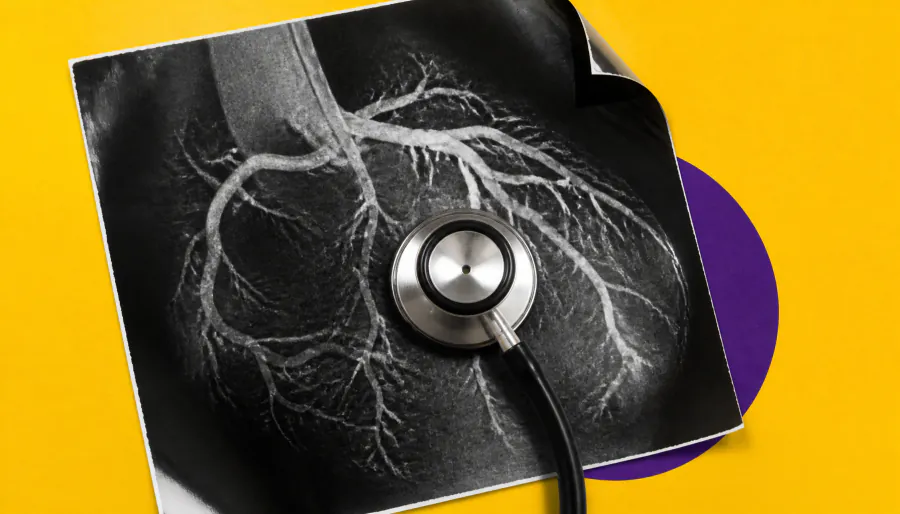
Visual assessments of artery blockages aren't enough. A substudy of the AIR-STEMI trial found that one-third of lesions with severe stenosis were actually not functionally significant when assessed using physiology-guided methods. Switching to physiology-guided care cut adverse events across all stenosis levels, suggesting it's time to rethink how we decide which blockages to treat.
Visual assessments of artery blockages aren't enough. A substudy of the AIR-STEMI trial, presented at TCT 2026, found that relying on angiography alone to gauge the severity of coronary artery blockages can be misleading — and potentially harmful. In patients with multivessel coronary artery disease (CAD) following a heart attack, one-third of lesions that looked severely narrowed on imaging turned out to be functionally insignificant when assessed using a physiology-guided approach.
The study enrolled 1,823 STEMI patients with multivessel disease and compared angiography-guided vs. physiology-guided treatment decisions for non-culprit lesions. Physiology-guided care — which uses blood flow estimates from angiographic images rather than a pressure wire — significantly reduced the risk of major adverse events and safety complications compared to conventional angiography-guided care.
By the Numbers:
Why it matters: These findings challenge the long-standing practice of using visual angiographic severity to decide which blockages to treat. Physiology-guided revascularization could prevent unnecessary procedures and reduce patient risk — a meaningful shift in how interventional cardiologists approach multivessel CAD.