Turn on cookies to sign in
Signing in saves your progress to your Curie account. We can only do that with cookies on — turn them on to continue.
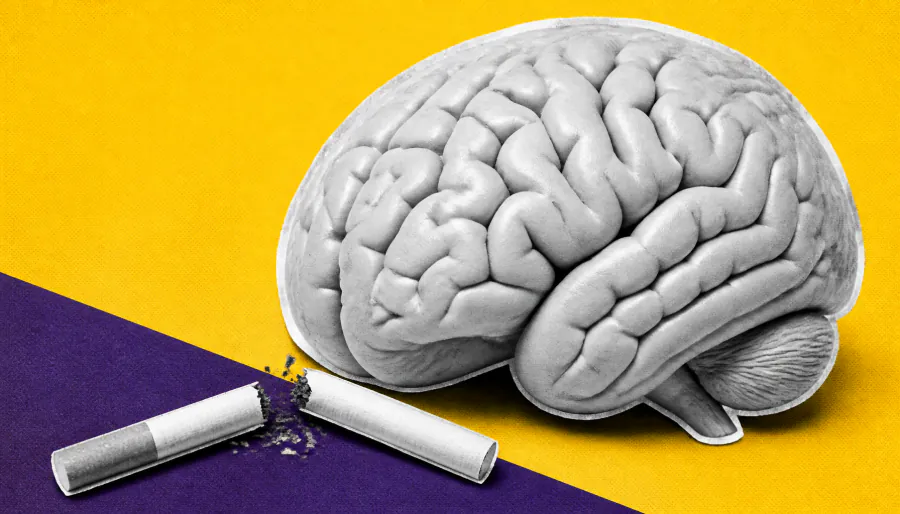
Knowing what's healthy and actually doing it are two very different things — and neuroscience explains why. Psychiatrist and neuroscientist Judson Brewer, MD, PhD, says the prefrontal cortex (the brain's decision-making hub) is the first to shut down under stress, pushing us back into old habits. Mindfulness training, he argues, can rewire those habit loops more effectively than willpower alone.
Ever wonder why patients know exactly what they should do — eat better, exercise, sleep more — but still can't seem to follow through? Brown University psychiatrist and neuroscientist Judson Brewer, MD, PhD, has a brain-based answer. Speaking at the American College of Lifestyle Medicine's annual meeting, Brewer explained that the prefrontal cortex — the brain's "should" center — is the first region to go offline under stress, leaving us defaulting to ingrained habits instead of healthy choices.
Brewer's fMRI research points to the brain's default mode network (DMN) as a key player. The DMN activates during cravings, worry, and self-referential thinking — and, crucially, it's directly quieted by mindfulness training. His team found that mindfulness-based programs reduced DMN activity in people trying to quit smoking, correlating with actual reductions in cigarette use.
Key Takeaways:
Why it matters: Behavior change is at the heart of lifestyle medicine, and this research gives clinicians a neuroscience-backed framework — not just motivational advice — to help patients break unhealthy cycles for good.