Turn on cookies to sign in
Signing in saves your progress to your Curie account. We can only do that with cookies on — turn them on to continue.
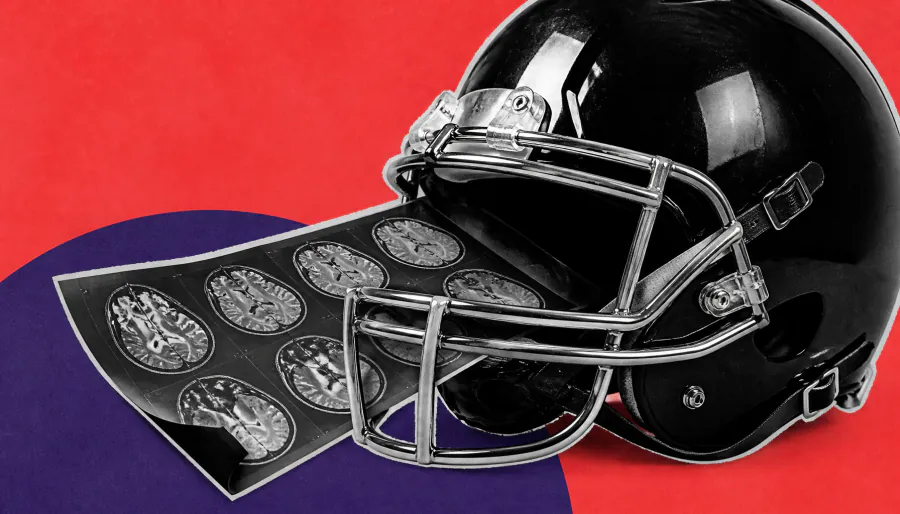
A new bias-adjusted study estimates that nearly 75% of deceased NFL players had chronic traumatic encephalopathy (CTE) neuropathology — a sobering figure even after accounting for the tendency of symptomatic players to donate their brains. Meanwhile, a phase 3 trial is underway to test whether a specialized PET imaging tracer could finally allow CTE to be diagnosed in living patients, potentially opening the door to future treatments.
A study published in JAMA Network Open offers the most rigorous prevalence estimate yet for chronic traumatic encephalopathy (CTE) among former NFL players. Analyzing 2,362 deceased players who died between 2008 and 2023, researchers found that after adjusting for selection bias — the tendency of symptomatic players to be more likely to donate their brains — an estimated 74.5% had CTE neuropathology at death. Even a conservative sensitivity analysis put the figure at 63.7%, suggesting the burden is real and substantial.
Still, experts caution that neuropathology doesn't automatically equal clinical disease. Many lower-stage CTE findings aren't associated with dementia, and cognitive decline in aging former athletes can stem from multiple causes, including Alzheimer's and vascular dementia. The study raises important questions but doesn't yet connect pathology to symptoms.
By the Numbers:
Why it matters: CTE can currently only be confirmed after death, making treatment development nearly impossible. A phase 3 trial testing F-18 flornaptitril PET imaging aims to change that — potentially enabling in-life diagnosis, disease monitoring, and eventually clinical trials for targeted therapies.