Turn on cookies to sign in
Signing in saves your progress to your Curie account. We can only do that with cookies on — turn them on to continue.

A promising new CAR T-cell therapy just got a double boost from the FDA. Prizlon-cel, which targets both CD19 and CD20, has received RMAT and fast track designations for patients with relapsed/refractory large B-cell lymphoma — especially those who've already failed a prior CAR T-cell treatment. Early phase 1 data showed a 91.5% overall response rate, signaling strong potential for this hard-to-treat population.
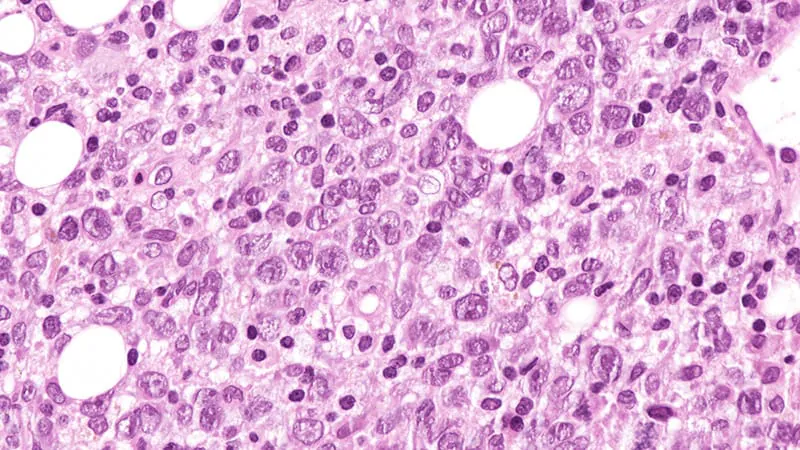
A new CAR T-cell therapy is gaining serious regulatory momentum. The FDA has granted both Regenerative Medicine Advanced Therapy (RMAT) and fast track designations to prizloncabtagene autoleucel (prizlon-cel), an investigational autologous CAR T-cell therapy that simultaneously targets CD19 and CD20. It's designed for patients with relapsed/refractory large B-cell lymphoma (LBCL) — particularly those whose disease has progressed after a commercially approved CAR T-cell product, a group with very limited options.
Early data paint an encouraging picture. A pooled analysis of four phase 1 trials in relapsed/refractory B-cell non-Hodgkin lymphoma showed strong efficacy, with most patients achieving deep and durable responses. The safety profile was notable for a high rate of cytokine release syndrome, though severe cases were rare. Developer AbelZeta plans to evaluate prizlon-cel in the phase 2 ABZT-121 trial, a single-arm, open-label study enrolling approximately 55 patients, with an estimated start date of May 2027.
By the Numbers:
Why it matters: Patients who relapse after CAR T-cell therapy have few effective treatment options and poor outcomes. Prizlon-cel's dual-antigen targeting strategy could help overcome resistance mechanisms that limit single-target therapies, potentially offering a meaningful new option for one of oncology's most challenging patient populations.