Turn on cookies to sign in
Signing in saves your progress to your Curie account. We can only do that with cookies on — turn them on to continue.
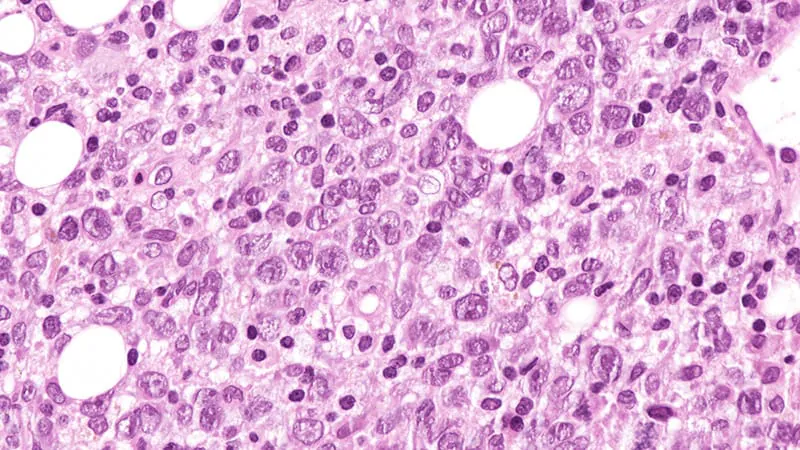
A new CAR T-cell therapy that silences two "exhaustion" proteins — PD-1 and TIGIT — is showing impressive results in relapsed or refractory large B-cell lymphoma. In a phase 1/2 trial of 73 evaluable patients, anbal-cel achieved a 67.1% complete response rate. Patients who maintained that response for at least 6 months had an 18-month overall survival rate of 83.9%.
A next-generation CAR T-cell therapy called anbalcabtagene autoleucel (anbal-cel) is turning heads in the lymphoma space. Designed to knock out two proteins — PD-1 and TIGIT — that cause immune cells to "burn out," anbal-cel showed strong efficacy in a multicenter phase 1/2 trial involving patients with relapsed or refractory large B-cell lymphoma (LBCL) who had already failed at least two prior lines of therapy.
Among 73 evaluable patients, the therapy delivered an objective response rate of 75.3% and a complete response rate of 67.1%. Patients who achieved a durable complete response (lasting ≥6 months) fared especially well, with 18-month progression-free and overall survival rates of 79.4% and 83.9%, respectively. Notably, these long-term responders also showed lower PD-1 and TIGIT expression on their CAR T cells — supporting the therapy's core mechanism.
By the Numbers:
Why it matters: CAR T-cell therapy has already revolutionized B-cell cancer treatment, but relapse and therapy resistance remain real challenges. Anbal-cel's dual knockdown approach addresses a key mechanism of treatment failure — T-cell exhaustion — and its relatively low neurotoxicity profile could make it more accessible to a broader patient population.