Turn on cookies to sign in
Signing in saves your progress to your Curie account. We can only do that with cookies on — turn them on to continue.
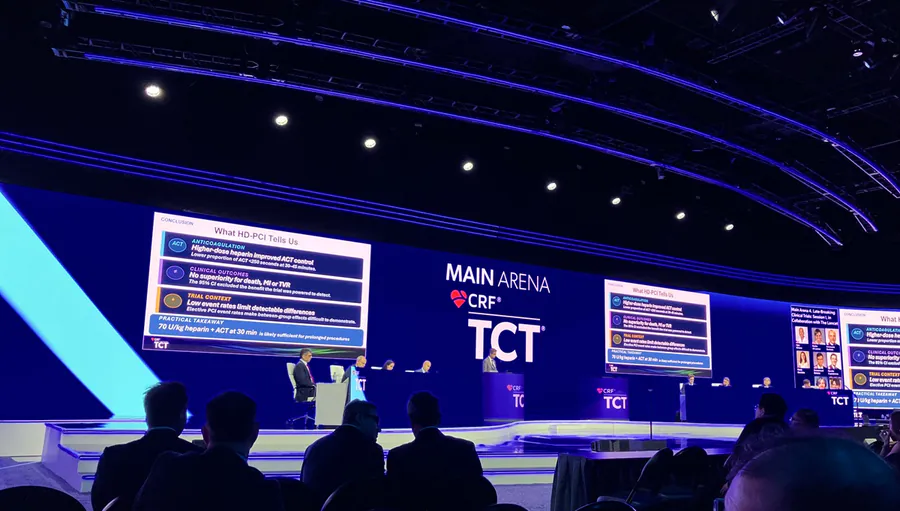
The HD-PCI trial found that lower-dose heparin (70 U/kg) works just as well as the higher standard dose (100 U/kg) during elective heart procedures. Across nearly 12,000 patients, rates of death, heart attack, and major bleeding were similarly low in both groups. The takeaway: 70 U/kg is probably sufficient — though the debate isn't fully settled.
For decades, interventional cardiologists have debated the optimal heparin dose during percutaneous coronary intervention (PCI) — and the HD-PCI trial, the largest study of its kind, just weighed in. Presented at TCT 2026, the trial found no meaningful clinical difference between high-dose (100 U/kg) and low-dose (70 U/kg) unfractionated heparin in patients undergoing elective PCI, suggesting the lower dose is likely sufficient for most cases.
The cluster-crossover randomized trial enrolled 11,619 patients across 11 Canadian centers between 2022 and 2024. Both groups showed similarly low rates of the primary composite outcome (death, MI, or target vessel revascularization) and major bleeding at 30 days — a reassuring finding given that balancing clot risk against bleeding risk is the central challenge of anticoagulation during PCI.
Key Takeaways:
Why it matters: Current ACC/AHA guidelines vaguely recommend 70–100 U/kg, leaving dosing largely to individual practice. HD-PCI offers reassurance that lower-dose heparin is safe and effective — potentially helping standardize practice and reduce unnecessary anticoagulation exposure.