Turn on cookies to sign in
Signing in saves your progress to your Curie account. We can only do that with cookies on — turn them on to continue.

Controlling cholesterol and blood pressure after a coronary stent procedure may not be enough. A new study finds that patients with elevated inflammation markers face a 58% higher risk of major cardiovascular events within a year of PCI — even when traditional risk factors are well-managed. Researchers say measuring hsCRP after stenting could help identify who needs targeted anti-inflammatory treatment.
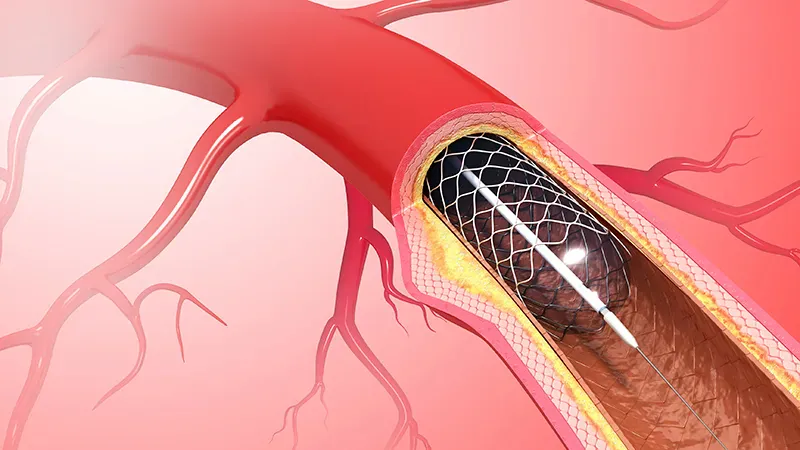
Managing the usual suspects — cholesterol, blood pressure, smoking, and blood sugar — after a coronary stent procedure may not be enough to keep patients safe. A new study published in Heart reveals that residual inflammatory risk, measured by elevated high-sensitivity C-reactive protein (hsCRP), significantly raises the odds of serious cardiovascular events within a year of percutaneous coronary intervention (PCI), even when all traditional risk factors are under control.
Researchers analyzed data from nearly 3,900 PCI patients at a US hospital over an 11-year period. About one in three had elevated hsCRP levels (≥2 mg/L) at baseline — a marker of lingering inflammation. While both groups fared similarly in the first 30 days post-procedure, the gap in outcomes widened considerably over the following months.
By the Numbers:
Why it matters: These findings suggest that inflammation is an independent and underappreciated risk pathway after PCI. Incorporating hsCRP testing into routine post-stent care could help clinicians identify high-risk patients who might benefit from anti-inflammatory therapies — potentially improving outcomes beyond what standard risk factor control alone can achieve.