Turn on cookies to sign in
Signing in saves your progress to your Curie account. We can only do that with cookies on — turn them on to continue.
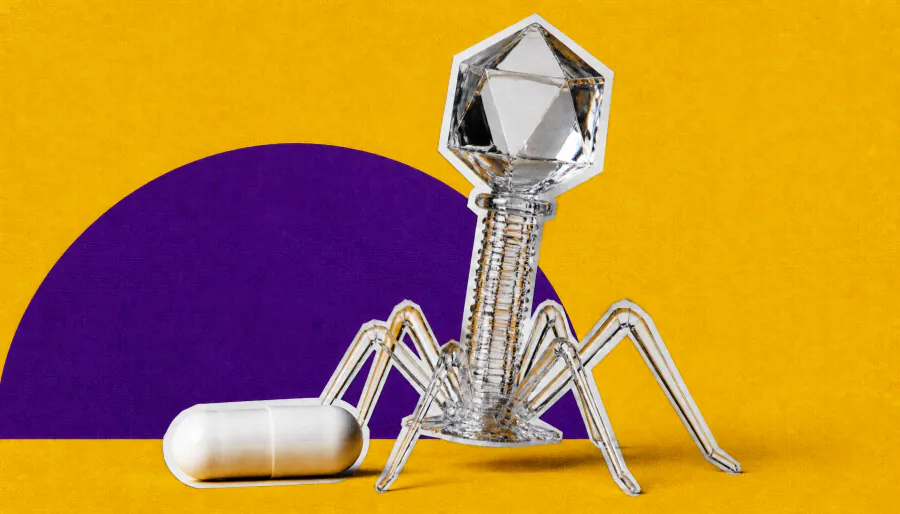
Nature's own bacteria-killers may hold the key to beating drug resistance. Researchers in Japan have uncovered how a bacteriophage protein called SglPP7 blocks a critical bacterial process, potentially paving the way for a new generation of antibiotics. The findings, published in PLOS Biology, offer a molecular blueprint for designing drugs that target drug-resistant bacteria.
Drug-resistant bacteria are a growing global threat, and scientists are increasingly looking to nature for solutions. Researchers at Japan's Nara Institute of Science and Technology (NAIST) have zeroed in on bacteriophages — viruses that naturally infect and kill bacteria — to understand how their proteins could be harnessed to fight superbugs.
The team studied a phage protein called SglPP7, which targets MurJ, a bacterial protein essential for building cell walls. Using cryo-electron microscopy and computer simulations, they revealed exactly how SglPP7 locks MurJ in a frozen position, preventing it from doing its job and ultimately killing the bacterium. Interestingly, two other phage proteins — LysM and SglCJ3 — block MurJ in different ways but achieve the same result, suggesting nature has independently evolved multiple strategies to hit the same target.
Key Takeaways:
Why it matters: With antibiotic resistance threatening to outpace our current drug arsenal, understanding how nature's own bacteria-killers work at the molecular level is a critical step toward developing the next generation of treatments.