Turn on cookies to sign in
Signing in saves your progress to your Curie account. We can only do that with cookies on — turn them on to continue.
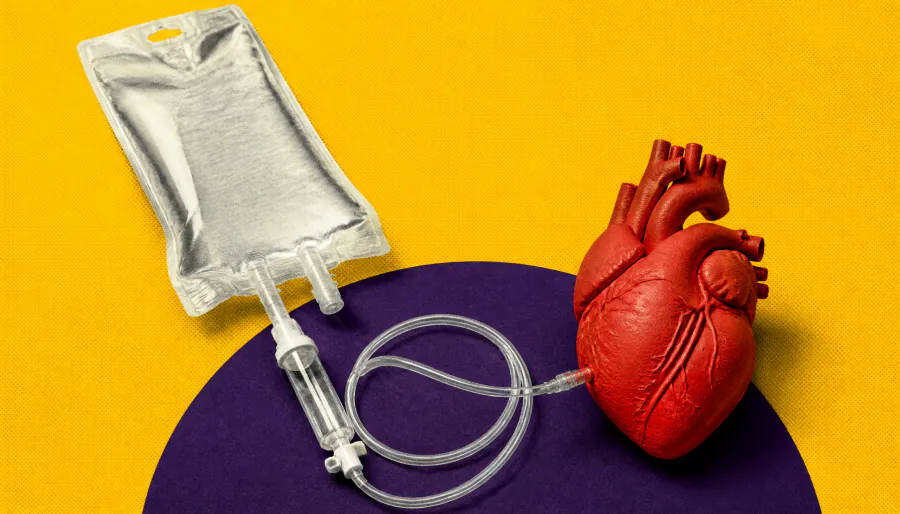
A single IV iron infusion significantly boosted exercise capacity in heart failure patients. The IRONMET-HFpEF trial found that ferric derisomaltose improved peak oxygen uptake, 6-minute walk distance, and aerobic function in HFpEF patients with iron deficiency — with no serious side effects. Researchers say the results are encouraging, but larger studies are needed.
More than half of patients with heart failure with preserved ejection fraction (HFpEF) also have iron deficiency — and a new trial suggests that a single IV iron infusion could meaningfully improve how well they function day-to-day. The IRONMET-HFpEF trial, presented at the American Heart Association Scientific Sessions and published in Circulation, randomly assigned 65 patients with HFpEF and iron deficiency to receive either ferric derisomaltose (FDI) or placebo.
At 12 weeks, patients who received the iron infusion showed significant improvements across multiple measures of exercise capacity, including peak oxygen uptake, 6-minute walk distance, and aerobic threshold — all with no serious adverse events. Researchers noted that oral iron wouldn't work in these patients due to elevated hepcidin levels that block absorption, making the IV route essential.
By the Numbers:
Why it matters: HFpEF is notoriously difficult to treat, with few therapies proven to improve functional capacity. This trial opens the door to iron repletion as a targeted, well-tolerated strategy — though experts stress that larger, more diverse studies are needed before it becomes standard practice.