Turn on cookies to sign in
Signing in saves your progress to your Curie account. We can only do that with cookies on — turn them on to continue.
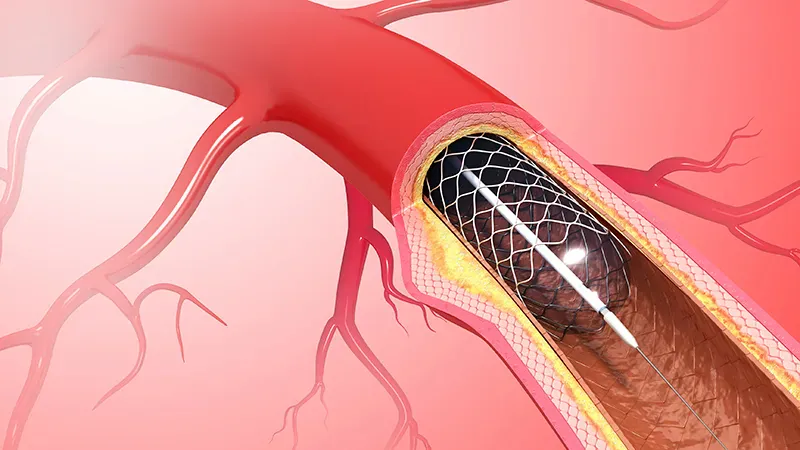
Stenting doesn't beat meds — even after 25 years. New long-term data from the landmark COURAGE trial confirm that percutaneous coronary intervention (PCI) offers no advantage over optimal medical therapy in reducing death or heart attacks in veterans with stable coronary artery disease. The findings, presented at the AHA Scientific Sessions and published in JAMA, reinforce decades of consistent evidence.
Stenting still can't outrun medication for stable heart disease
The debate over whether to stent or medicate patients with stable coronary artery disease (CAD) just got a definitive long-term answer — and it's firmly in medicine's corner. New data from the COURAGE trial, tracking veterans for up to 25 years, show that PCI added on top of optimal medical therapy did not reduce the risk of death or heart attack compared to medication alone. The results, presented at the American Heart Association Scientific Sessions and published in JAMA, are strikingly consistent with findings from 2007 and 2015.
Notably, nearly half of patients managed with medication alone never needed revascularization over the entire follow-up period — a finding that challenges the instinct to intervene early.
By the Numbers
Why it matters: For cardiologists still on the fence about elective PCI in stable CAD patients, this 25-year dataset offers the clearest signal yet: routine upfront stenting doesn't extend life or prevent heart attacks. Optimal medical therapy remains a robust, evidence-backed first-line strategy.