Turn on cookies to sign in
Signing in saves your progress to your Curie account. We can only do that with cookies on — turn them on to continue.
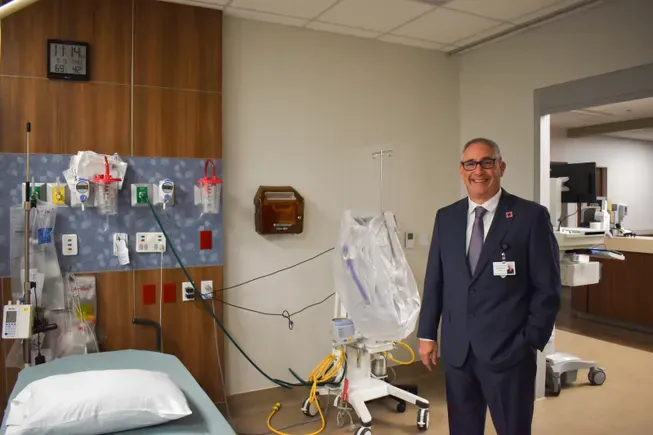
Tucked between a DMV and a pizzeria in West Virginia, Mon Marion Neighborhood Hospital is part of a growing wave of "micro-hospitals" — small, low-cost acute care facilities popping up across the U.S. With just 10 inpatient beds, the hospital offers ER care, overnight monitoring, imaging, and telehealth — all at a fraction of traditional hospital costs. The model is gaining traction as a lifeline for rural and underserved communities.
Tucked into a West Virginia strip mall between a DMV and a pizzeria, Mon Marion Neighborhood Hospital doesn't look like much from the outside. But inside, it functions as a fully certified acute care hospital — complete with an emergency department, inpatient beds, CT scans, labs, and telehealth access to specialists. It's part of a fast-growing national trend of "micro-hospitals," small facilities with fewer than 50 beds that are significantly cheaper to build and operate than traditional hospitals.
The model is proving especially valuable in rural and semi-rural areas where hospital closures have left care gaps. Mon Marion was built in part to fill the void left by the shuttering of Fairmont Regional Medical Center, and similar facilities have opened in Pennsylvania, Texas, Arizona, and beyond. Emerus Health, the largest operator of neighborhood hospitals, now runs 52 micro-hospitals with 24 more in development.
By the Numbers:
Why it matters: As rural hospital closures accelerate and cost pressures mount, micro-hospitals offer a scalable, affordable model to restore care access in underserved communities — without the massive price tag of full-scale facilities.