Turn on cookies to sign in
Signing in saves your progress to your Curie account. We can only do that with cookies on — turn them on to continue.
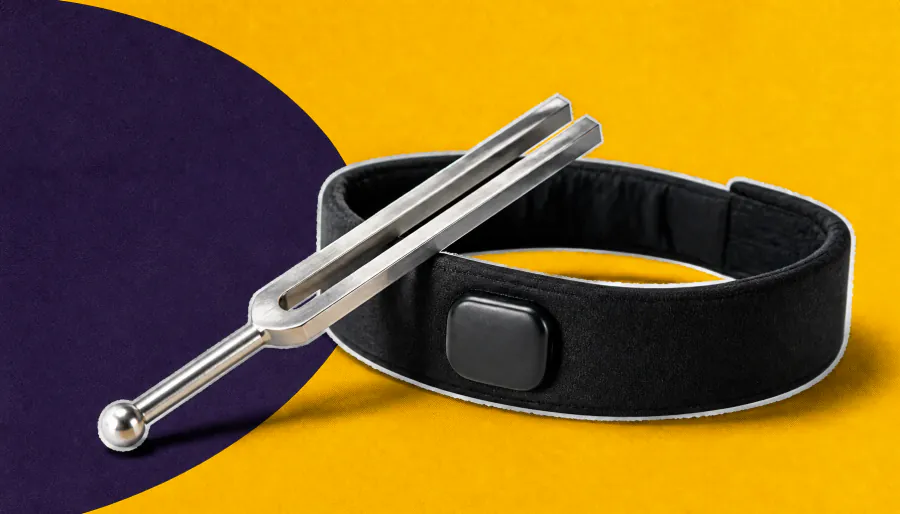
A wearable headband that delivers sound cues during sleep helped people with temporal lobe epilepsy (TLE) get more deep sleep and think more clearly the next day. In a small crossover study, both epilepsy patients and healthy controls showed improved memory and reduced tension after a night of acoustic stimulation — with epilepsy patients seeing the biggest gains. Researchers say this non-invasive approach could be a game-changer for managing epilepsy's cognitive side effects.
For people with temporal lobe epilepsy (TLE), the struggle isn't just about seizures — it's also about poor sleep, foggy thinking, and difficulty functioning day-to-day. Now, a new study suggests that acoustic stimulation, delivered via a wearable headband, could help address these often-overlooked burdens in a simple, non-invasive way.
In a two-night crossover study of 78 participants (38 with TLE, 40 healthy controls), researchers found that wearing the Philips SmartSleep Deep Sleep Headband — which plays phase-locked tones during slow wave sleep — led to meaningful improvements in deep sleep, next-morning cognition, and self-reported tension and calmness. The memory benefits were especially pronounced in the TLE group, likely because they start from a deeper sleep deficit.
By the Numbers:
Why it matters: Epilepsy care has long focused on seizure control, but cognitive and sleep impairments significantly affect patients' quality of life. Acoustic stimulation offers a promising, drug-free add-on therapy that could help patients think more clearly, sleep better, and potentially reduce reliance on anti-seizure medications over time.