Turn on cookies to sign in
Signing in saves your progress to your Curie account. We can only do that with cookies on — turn them on to continue.

A Yakima County, Washington resident has become the first person to die from bird flu in the U.S. in 2026, after contracting H5N1 from infected dairy cows. Experts warn that the overlap of avian flu activity with regular flu season raises the risk of viral recombination — and potentially a new pandemic strain.
A resident of Yakima County, Washington, died Sunday after contracting H5N1 bird flu from infected dairy cows — marking the first U.S. bird flu fatality of 2026 and only the third human death linked to the virus since it jumped to dairy herds in early 2024. The individual had underlying health conditions and was hospitalized with severe illness before passing. Washington health officials have confirmed infections across 34 dairy herds in the state, though they maintain that the public risk remains low.
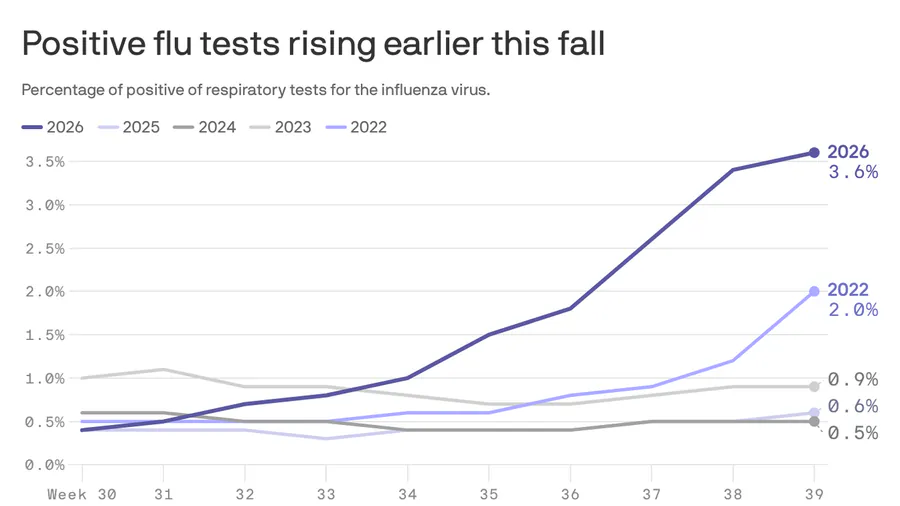
Experts, however, are sounding the alarm. The timing — right as regular flu season kicks off — is what has epidemiologists most worried. When human and avian flu viruses circulate simultaneously, there's a real chance they could swap genetic material and produce a new, potentially pandemic-capable strain. Some experts are also calling for the vaccination of U.S. dairy cattle against H5N1, arguing it could cut off a key transmission pathway and help avert future pandemics.
By the Numbers:
Why it matters: With flu season underway, the co-circulation of H5N1 and seasonal influenza creates a window for dangerous viral recombination. Experts are calling for expanded surveillance, stronger protections for farmworkers, and serious consideration of vaccinating U.S. dairy cattle to reduce transmission risk before the situation escalates.