Turn on cookies to sign in
Signing in saves your progress to your Curie account. We can only do that with cookies on — turn them on to continue.
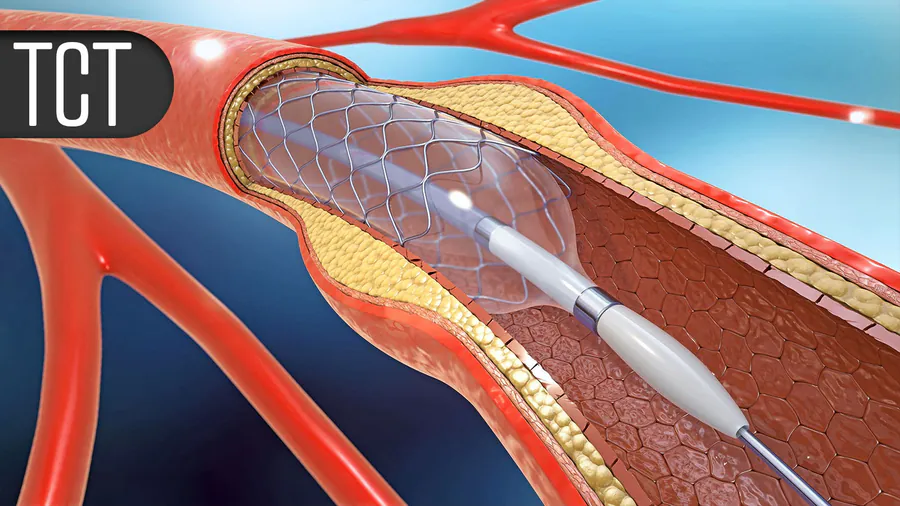
Planning heart stenting procedures with CT scans before entering the cath lab is just as safe and effective as traditional real-time guidance, according to the landmark P4 trial. The CCTA-guided approach matched intravascular ultrasound (IVUS) guidance on major outcomes at 12 months — and came with shorter procedures and less contrast dye. Experts say this could reshape how cardiologists prepare for complex coronary interventions.
The P4 trial — published simultaneously in the New England Journal of Medicine and presented at the TCT annual conference — found that using coronary CT angiography (CCTA) to plan percutaneous coronary intervention (PCI) before cardiac catheterization is noninferior to the current gold standard of intravascular ultrasound (IVUS) guidance. The idea: shift the cognitive heavy lifting of procedure planning upstream, so cardiologists arrive at the cath lab already prepared rather than making complex decisions on the fly.
The trial enrolled 1,105 patients across 23 centers, the majority with stable ischemic heart disease and significant coronary calcification. Experts called it a "landmark" study, though they noted that high-quality CT scans and cardiologist training on reading CT images will be essential to making this approach work in practice.
By the Numbers:
Why it matters: If widely adopted, CT-based PCI planning could reduce procedural variability, enable shared decision-making with patients ahead of time, and streamline cath lab workflows — though radiation and contrast exposure from the additional CT scan remain important considerations. A follow-up trial (P5) is already underway in higher-complexity patients.