Turn on cookies to sign in
Signing in saves your progress to your Curie account. We can only do that with cookies on — turn them on to continue.
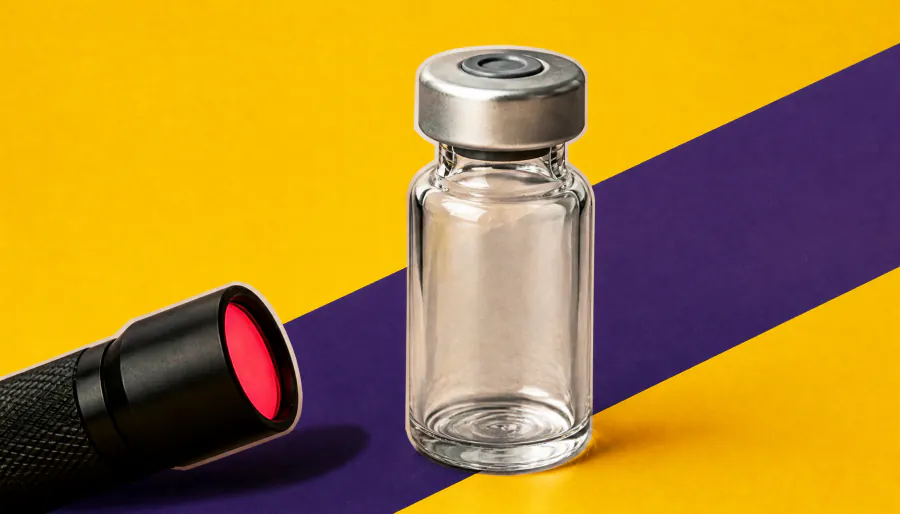
Scientists have developed RuPHOTACs — molecular cages that keep powerful protein-destroying drugs dormant until activated by red light. The technology builds on PROTACs, which eliminate disease-driving proteins rather than just blocking them. By adding a light-switch mechanism, researchers hope to dramatically reduce the collateral damage these drugs can cause in healthy tissue.
Scientists at North Carolina State University have engineered a molecular "cage" that holds protein-degrading drugs in an inactive state until a beam of low-energy red light sets them free. The technology, dubbed RuPHOTACs, builds on an existing class of drugs called PROTACs — molecules that act like matchmakers, linking a disease-causing protein to a cellular "trash-tagging" enzyme so the protein gets destroyed. Unlike traditional inhibitors that merely block a protein, PROTACs catalytically eliminate it, making them especially potent against cancer-driving targets.
The catch? Most proteins involved in disease also play vital roles in healthy cells, meaning a PROTAC active throughout the body can cause serious side effects. The ruthenium-based cage solves this by physically blocking the drug until red light — which penetrates biological tissue well — removes the cage and switches the drug on precisely where needed. The approach was tested in vitro and in a zebrafish model, with results published in Nature Communications.
Key Takeaways:
Why it matters: Spatial and temporal control over protein degradation could unlock a new generation of targeted therapies — particularly for cancers where disease proteins are indistinguishable from their healthy counterparts. This proof-of-concept lays the groundwork for safer, more precise medicines.