Turn on cookies to sign in
Signing in saves your progress to your Curie account. We can only do that with cookies on — turn them on to continue.
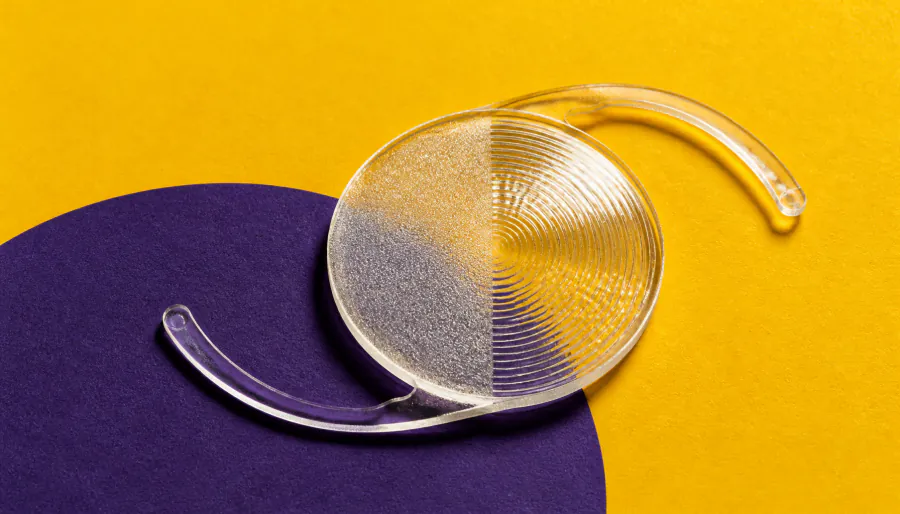
When it comes to implantable Collamer lenses (ICL), there's no universal "best" orientation. A new meta-analysis found that vertical ICL implantation leads to slightly lower postoperative vault compared to horizontal placement — but when orientation was individualized per patient anatomy, that difference largely disappeared. The takeaway: personalized placement, not a one-size-fits-all approach, is key to optimal outcomes.
When it comes to EVO implantable Collamer lenses (ICL), the debate between vertical and horizontal placement just got a clearer answer — and it's "it depends." A new systematic review and meta-analysis presented at the European Society of Cataract and Refractive Surgeons (ESCRS) meeting in London found that vertical ICL implantation was associated with a modestly lower postoperative vault. Crucially, when orientation was individualized based on each patient's anatomy, that difference became statistically insignificant.
Researchers analyzed 16 comparative studies covering 5,316 eyes. While vertical placement showed a mean vault reduction of –77 µm overall, rotational stability, refractive outcomes, and short-term safety were comparable between both groups — suggesting neither orientation is inherently superior.
Key Takeaways:
Why it matters: Lower postoperative vault raises concerns about endothelial cell loss and cataract formation. This study reinforces that surgeons should tailor ICL orientation to each patient's unique anatomy rather than defaulting to a single approach — a shift that could meaningfully improve long-term safety outcomes.