Turn on cookies to sign in
Signing in saves your progress to your Curie account. We can only do that with cookies on — turn them on to continue.
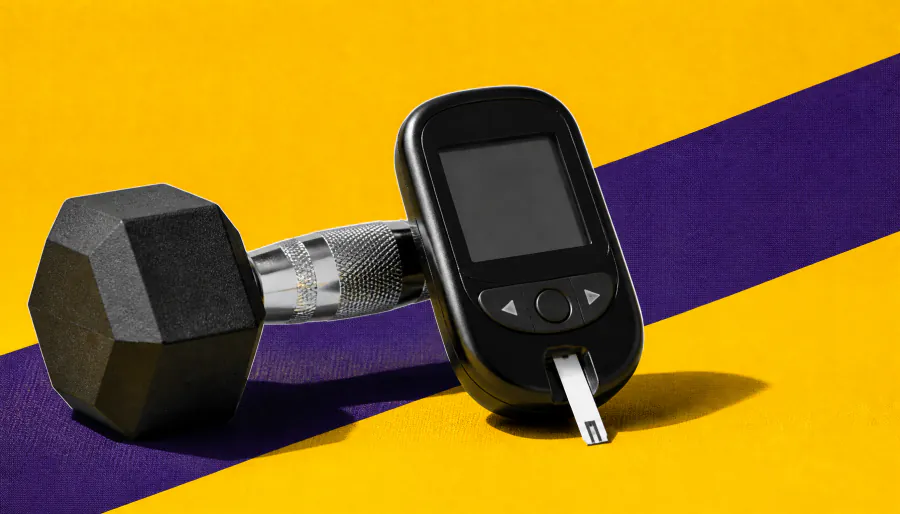
More than half of younger adults with type 2 diabetes achieved full remission in just six months — no medication required. The RESET for Remission trial found that 54% of participants under 45 who followed an intensive low-calorie diet and supervised exercise program reached remission, versus just 4% receiving standard care. And they lost fat while preserving muscle mass.
The RESET for Remission trial, published in The Lancet Regional Health: Americas and presented at the EASD 2026 Annual Meeting, tested whether combining a low-calorie diet with structured exercise could drive early-onset type 2 diabetes (diagnosed at age 45 or younger) into remission. Ninety-six adults with obesity and early-onset T2D were randomized to either usual care or an intensive 24-week program: an 800–900 calorie/day diet plus twice-weekly supervised aerobic and resistance exercise for the first 12 weeks, followed by a weight-maintenance phase.
The results were striking. Participants in the intervention were 21 times more likely to achieve remission than those in standard care. Beyond blood sugar control, the program also improved cardiovascular fitness, reduced liver and pancreatic fat, lowered blood pressure, and boosted mood and quality of life — all while preserving lean muscle mass, a key concern during rapid weight loss.
Early-onset T2D is more aggressive than later-onset disease, carrying higher lifetime risks of cardiovascular complications and premature death. A non-pharmacological path to remission — one that's also less costly than GLP-1 drugs or metabolic surgery — could reshape how clinicians approach treatment for younger patients, especially those considering pregnancy. Longer-term studies in real-world settings are still needed to confirm durability.