Turn on cookies to sign in
Signing in saves your progress to your Curie account. We can only do that with cookies on — turn them on to continue.

Vaccinated schools, safer schools. A CDC-led study of a 1,000+ case measles outbreak across North and South Carolina found that schools with higher MMR vaccination rates had far fewer secondary cases. Every 5-percentage-point increase in vaccination coverage was linked to a 14% lower risk of secondary infection — a powerful reminder of what's at stake when vaccine uptake drops.
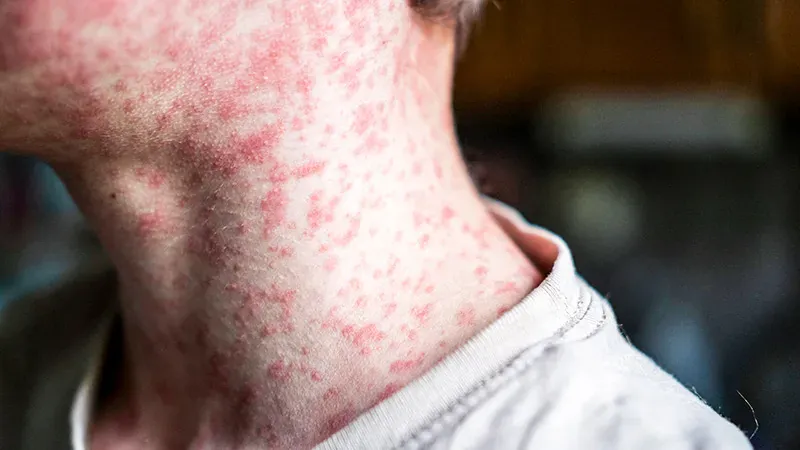
A major measles outbreak swept through North and South Carolina between October 2025 and April 2026, tallying over 1,000 cases — 997 in South Carolina and 24 in neighboring North Carolina counties. The vast majority of those infected were unvaccinated or had unknown vaccination status, and cases were concentrated among elementary- and middle-school-aged children.
CDC researchers investigated 68 index cases across 35 schools to understand how measles spread in school settings. Of the 987 people exposed, 102 developed measles — a secondary attack rate of roughly 10% overall, and 15% among schools that reported at least one secondary case. Nearly all secondary cases (89%) were unvaccinated.
By the Numbers:
Why it matters: This study puts hard numbers behind what public health officials have long argued — vaccination coverage isn't just a personal choice, it's a community shield. Even modest improvements in school-level MMR uptake can meaningfully reduce outbreak severity, making vaccination campaigns in school settings a critical line of defense.