Turn on cookies to sign in
Signing in saves your progress to your Curie account. We can only do that with cookies on — turn them on to continue.
Scientists have successfully transplanted human cortical organoids into specially engineered mice, with the grafts integrating into the central nervous system and improving motor and memory function. The breakthrough, dubbed "xenocortication," offers an unprecedented window into early human brain development and could accelerate research into cerebral palsy, epilepsy, and autism — while also raising new ethical questions about oversight.
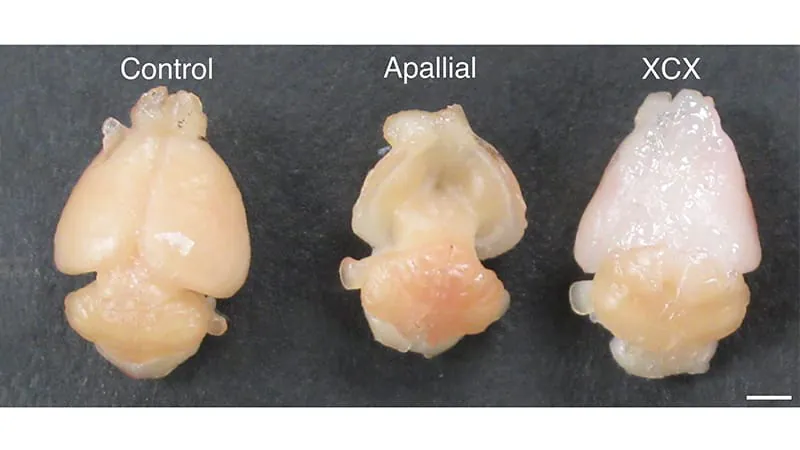
Stanford neuroscientist Sergiu Pasca, MD, and his team have achieved a major milestone in brain research: successfully transplanting human cortical organoids into specially engineered "apallial" mice — animals missing 98% of their cerebral cortex and hippocampus. The transplants integrated into the mice's central nervous systems, improved their gait and working memory, and caused their brains to grow nearly fivefold over three months. Pasca calls the technique "xenocortication," and says the goal is not transplantation as therapy, but rather making previously inaccessible human brain biology experimentally accessible.
The model has already yielded striking findings. A hypoxia experiment showed that low oxygen selectively injured the human cortical cells — but not the mouse's own cells — mirroring the vulnerability seen in human perinatal brain injury linked to cerebral palsy. Researchers also unexpectedly observed von Economo neurons, a rare cell type never before grown in culture and implicated in frontotemporal dementia.
Key Takeaways:
Why it matters: This platform could fundamentally reshape how scientists study — and eventually treat — neuropsychiatric disorders by bridging human genetics, tissue biology, and targeted therapies in a living system.