Turn on cookies to sign in
Signing in saves your progress to your Curie account. We can only do that with cookies on — turn them on to continue.
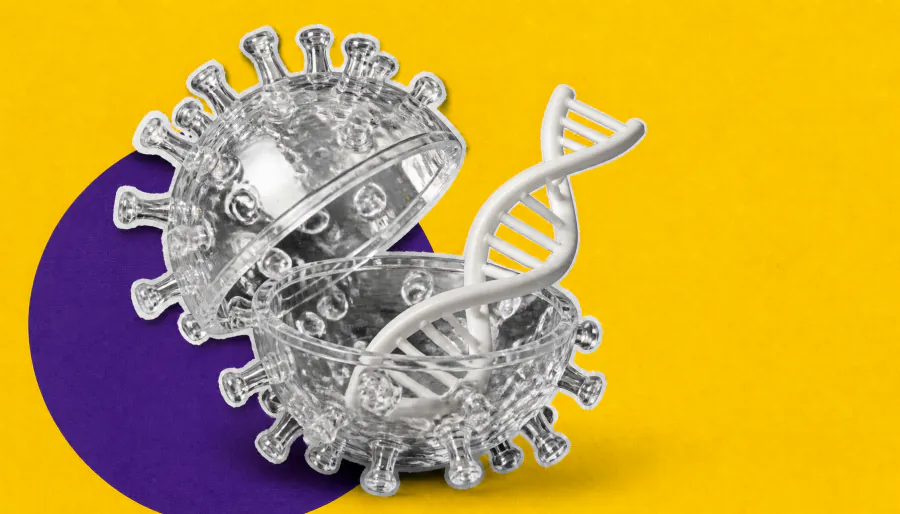
Portland State University's eXtreme Virus Lab has secured a $1 million NSF grant to study cruciviruses — a mysterious group that appears to have evolved through recombination between RNA and DNA viruses. Researchers hope to identify host organisms, track gene transfer events, and better understand how new viruses emerge. The findings could have major implications for pandemic preparedness.
Portland State University's eXtreme Virus Lab has landed a three-year, $1 million National Science Foundation grant to dig deeper into one of virology's most puzzling discoveries: cruciviruses. First identified by the lab in 2012, cruciviruses appear to have evolved through an unprecedented recombination between RNA viruses (like the flu) and DNA viruses (like monkeypox) — two groups long thought to evolve on completely separate tracks. Hundreds of cruciviruses have since been found in environments ranging from Antarctic lake water to campus soil.
The new grant will fund targeted discovery of cruciviruses, related RNA viruses, and their still-unknown host microorganisms. The team will use machine learning and evolutionary modeling to trace how these hybrid viruses came to be — and whether similar RNA-DNA crossovers could give rise to dangerous new pathogens.
Key Takeaways:
Why it matters: If RNA and DNA viruses can swap genetic material in nature, a dangerous hybrid pathogen is theoretically possible. This research aims to understand the mechanics before such a scenario plays out in a medical context.