Turn on cookies to sign in
Signing in saves your progress to your Curie account. We can only do that with cookies on — turn them on to continue.
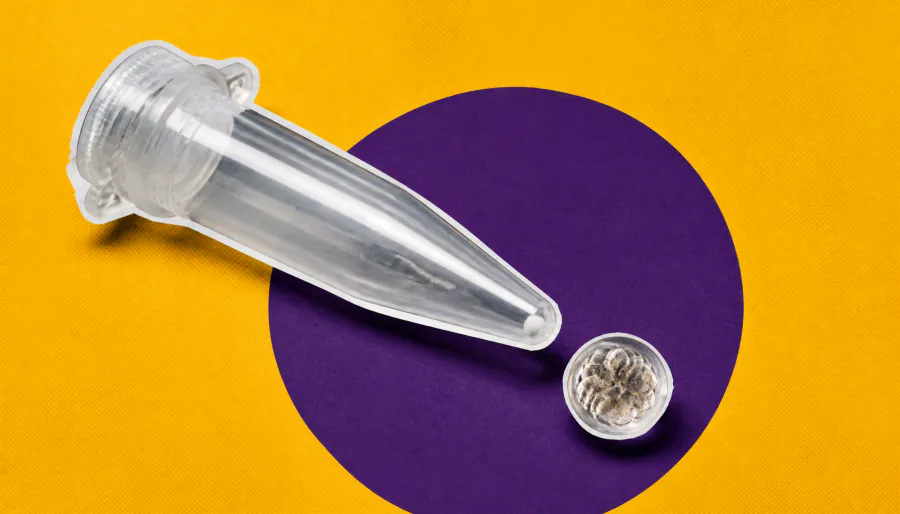
Scientists have discovered that amyloid fibrils in seminal fluid can bind RNA and help sperm deliver it to embryos. In mouse IVF experiments, synthetic fibrils boosted RNA delivery to embryos at least tenfold compared to no fibril exposure. The findings open a speculative but intriguing door for non-viral genetic delivery during fertilization.
Scientists have long known that sperm carry RNA into embryos, but the "how" has remained murky — until now. A new study published in Molecular Cell reveals that amyloid fibrils found in seminal fluid may be the key couriers. These fibrils, formed by a protein fragment called PAP, can bind RNA, protect it from degradation, and ferry it into sperm — which then deliver it to the embryo at fertilization.
The research team used cryo-electron microscopy, live-cell imaging, and mouse IVF experiments to piece together the mechanism. They found that RNA itself actually triggers the formation of these amyloid fibrils through a liquid-to-solid phase transition — and that the process is conserved across humans, cows, and mice, suggesting it's a fundamental biological feature rather than a quirk.
By the Numbers
Why it matters: Beyond explaining a basic biological mystery, these findings hint at a potential non-viral platform for delivering therapeutic RNA during fertilization — a possible future tool for families at high genetic risk. However, researchers caution that safety concerns — including known links between seminal amyloids and increased HIV infectivity — must be carefully evaluated before any clinical application is considered.