Turn on cookies to sign in
Signing in saves your progress to your Curie account. We can only do that with cookies on — turn them on to continue.
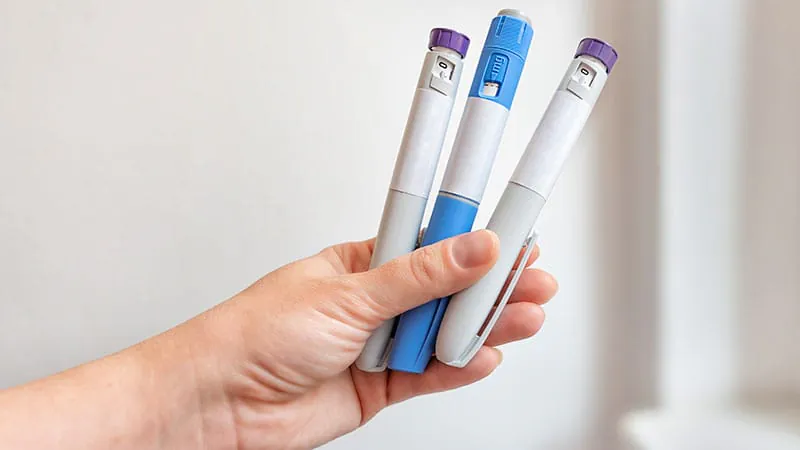
As GLP-1 receptor agonists surge in popularity among women of reproductive age, ACOG has released its first formal guidance on their use before, during, and after pregnancy. The bottom line: stop GLP-1s 1–2 months before conception, avoid them entirely during pregnancy, and proceed with caution during breastfeeding. Experts warn that significant evidence gaps remain, and more research is urgently needed.
With roughly 1 in 300 women now exposed to GLP-1 receptor agonists (GLP-1 RAs) before pregnancy — and access expanding through online providers and medical spas — ACOG has issued long-awaited guidance to help clinicians navigate this growing clinical challenge. The advisory covers three key windows: preconception, pregnancy, and lactation, and is reinforced by two recent meta-analyses and an international expert consensus statement published in The Lancet.
The guidance is clear on pregnancy: GLP-1s should be discontinued 1–2 months before conception and avoided entirely during pregnancy. For patients with inadvertent first-trimester exposure, meta-analyses across tens of thousands of women show no significant increase in major birth defects, preterm birth, or other adverse outcomes — though experts caution this does not establish safety. During breastfeeding, individualized decision-making is recommended, with a preference for shorter half-life agents, close monitoring of infant weight, and avoidance in preterm infants and newborns.
Key Takeaways:
Why it matters: GLP-1 RAs are among the fastest-growing drug classes in the world, and women of reproductive age are a major user group. Without clear safety data, clinicians have been navigating these conversations without formal guidance — until now. ACOG's advisory provides a practical framework, but also underscores an urgent need for robust prospective research on maternal and infant outcomes.