Turn on cookies to sign in
Signing in saves your progress to your Curie account. We can only do that with cookies on — turn them on to continue.
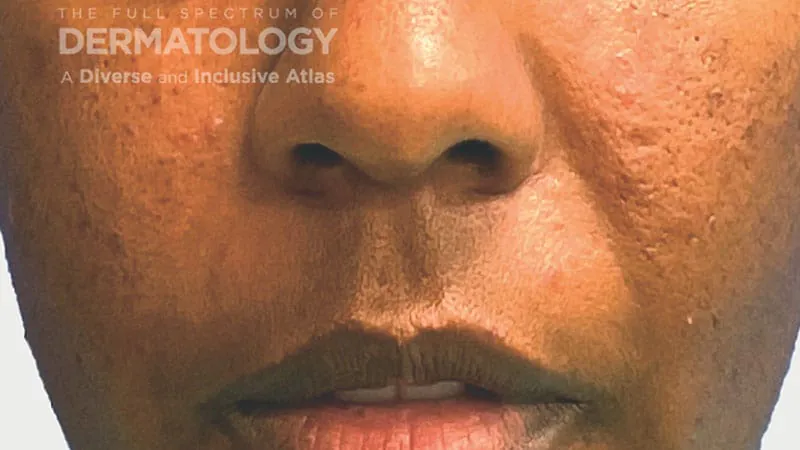
Rosacea is widely assumed to be a condition of fair-skinned people, but experts say it's significantly underdiagnosed in patients with darker skin tones. The classic signs — like facial redness — are harder to spot, and clinician bias compounds the problem. A symptom-first approach and tools like dermoscopy can help close the diagnostic gap.
Rosacea is commonly thought of as a condition affecting fair-skinned women of Northern European descent — but dermatologists say that picture is incomplete. Experts argue that rosacea is not rare in patients with darker skin types; it's just routinely missed. The classic hallmark of facial erythema (redness) is harder to detect in darker skin, and clinician bias means the diagnosis often doesn't even make it onto the differential.
To counter this, dermatologist Hilary Baldwin recommends a symptom-first approach using the acronym ALTER: Ask questions about warmth, itching, or burning; Look for nonclassic signs like edema or dry skin; use Tools like dermoscopy or diascopy; Educate patients on skin care; and Recommend sunscreen. Erythema in darker skin may appear as purple or brown discoloration rather than pink or red — a nuance that's easy to overlook.
Treatment is broadly similar across skin types, though clinicians should favor low-irritation topicals (like ivermectin 1% cream or minocycline 1.5% foam) to minimize the higher risk of iatrogenic hyperpigmentation in darker-skinned patients.
Key Takeaways:
Why it matters: Missed diagnoses mean delayed treatment and unnecessary suffering. Shifting to a symptom-based framework could help clinicians catch rosacea across all skin tones — and reduce a longstanding disparity in dermatologic care.