Turn on cookies to sign in
Signing in saves your progress to your Curie account. We can only do that with cookies on — turn them on to continue.
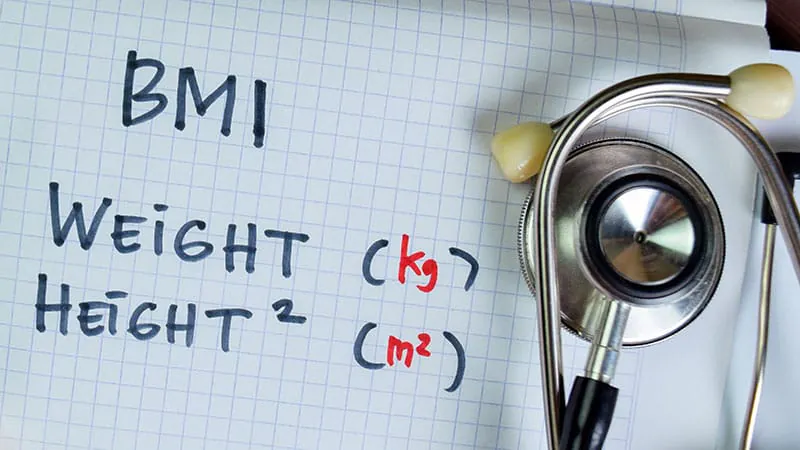
BMI alone may be misleading for head and neck cancer patients on radiation therapy. A new retrospective study found that while higher BMI was linked to better survival, it's actually skeletal muscle — not fat — driving that benefit. Patients with more intermuscular fat fared worse, highlighting why body composition matters more than the number on the scale.
Higher BMI has long been associated with better survival in certain cancer patients — a phenomenon called the "obesity paradox." A new retrospective cohort study of 1,187 head and neck cancer patients undergoing radiation therapy confirms this trend, but adds a critical twist: not all BMI is created equal.
Using automated 3D CT-based body composition analysis in a subcohort of 659 patients, researchers found that skeletal muscle and fat distribution tell very different survival stories. Patients with more muscle fared better, while those with more intermuscular fat fared worse — even at the same BMI. Importantly, weight gain in higher-BMI patients was driven more by subcutaneous fat than muscle, exposing BMI's limitations as a proxy for treatment resilience.
Key Takeaways:
Why it matters: For clinicians, this signals a shift toward body composition-aware care — including early dietitian referrals, prehabilitation, and muscle-preserving strategies — rather than relying on BMI alone to gauge a patient's ability to tolerate treatment.