Turn on cookies to sign in
Signing in saves your progress to your Curie account. We can only do that with cookies on — turn them on to continue.
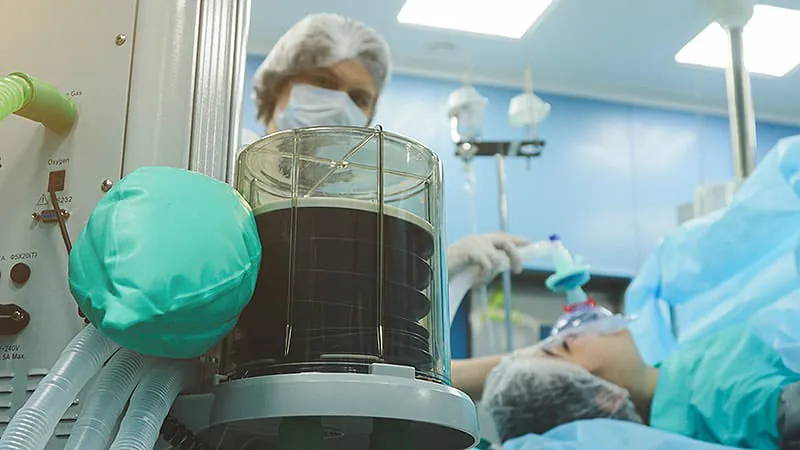
Remote ICU care is proving its worth where it's needed most. An 18-month study of four under-resourced Los Angeles hospitals found that a 24/7 tele-ICU program reduced overall hospital length of stay by 19% — without increasing ventilator use or mortality. The program was built on existing technology, helping keep implementation costs low.
Remote ICU care is proving its worth where it's needed most. A retrospective cohort study presented at the CHEST 2026 Annual Meeting tracked 6,300+ ICU admissions across four safety-net hospitals in Los Angeles — none of which had in-house intensivists — over 18 months after launching a 24/7, intensivist-led tele-ICU program in September 2024. The program used a closed ICU model, meaning remote intensivists directly directed care and wrote orders around the clock, supported by structured night rounds, standardized protocols, and early discharge planning.
The headline result: overall hospital length of stay dropped by roughly 1.7 days (from 8.8 to 7.1 days), a ~19% reduction. ICU length of stay and ventilator use stayed flat — a sign of stability, not stagnation. Mortality trends showed no credible increase, and one hospital even saw a significant 6% monthly drop in mortality odds post-implementation.
By the Numbers:
Why it matters: Safety-net hospitals often serve the most vulnerable patients with the fewest resources. This study shows that a thoughtfully implemented tele-ICU program — built on existing technology — can meaningfully improve care access and efficiency without compromising safety, offering a scalable model for resource-constrained systems nationwide.