Turn on cookies to sign in
Signing in saves your progress to your Curie account. We can only do that with cookies on — turn them on to continue.
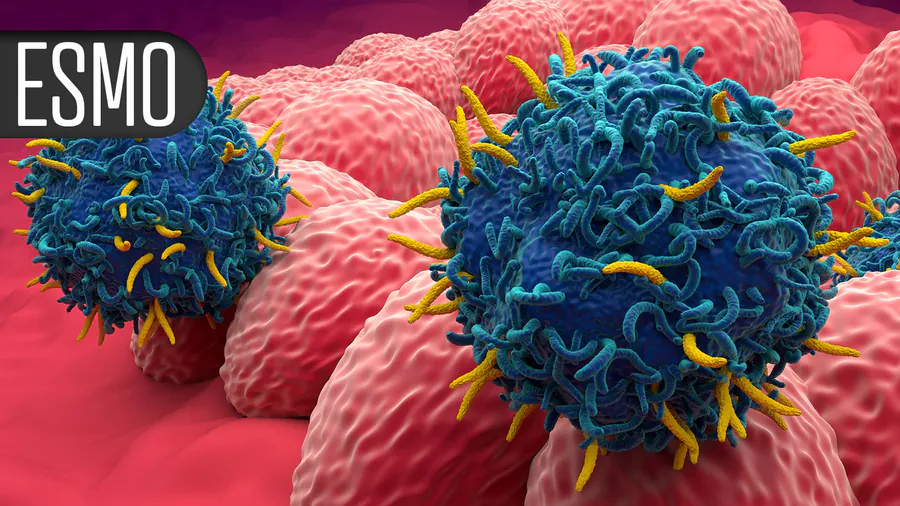
A phase 3 trial just rewrote the playbook for one of oncology's toughest cancers. The DeLLphi-305 trial showed that adding tarlatamab to durvalumab maintenance therapy pushed median overall survival in extensive-stage small-cell lung cancer to 21 months — up from just 12.7 months with durvalumab alone. Experts at ESMO called the results "unprecedented," with the audience responding with a standing ovation.
A phase 3 trial just rewrote the playbook for one of oncology's toughest cancers. The DeLLphi-305 trial showed that adding tarlatamab (Imdelltra) to durvalumab (Imfinzi) maintenance therapy after first-line chemoimmunotherapy pushed median overall survival (OS) in extensive-stage small-cell lung cancer (ES-SCLC) to 21 months — nearly double the 12.7 months seen with durvalumab alone. Progression-free survival also leapt from 1.9 months to 7.4 months. The results were presented at the 2026 ESMO Congress and simultaneously published in the New England Journal of Medicine, earning a rare standing ovation from the audience.
Small-cell lung cancer has long been defined by rapid relapse after initial chemotherapy response, with historical OS hovering around 12–13 months. These results, which were consistent across all prespecified subgroups — including patients with brain or liver metastases — represent a meaningful shift in what's possible. Lead investigator Jacob Sands, MD, of Dana-Farber Cancer Institute called the combination a "new standard of care."
By the Numbers:
Why it matters: ES-SCLC has been notoriously resistant to progress, but tarlatamab's bispecific T-cell engager mechanism appears to fundamentally change the disease trajectory. With a manageable toxicity profile and durable responses, this regimen is poised to become the new frontline maintenance standard — offering patients meaningful hope in a disease where it has long been scarce.