Turn on cookies to sign in
Signing in saves your progress to your Curie account. We can only do that with cookies on — turn them on to continue.
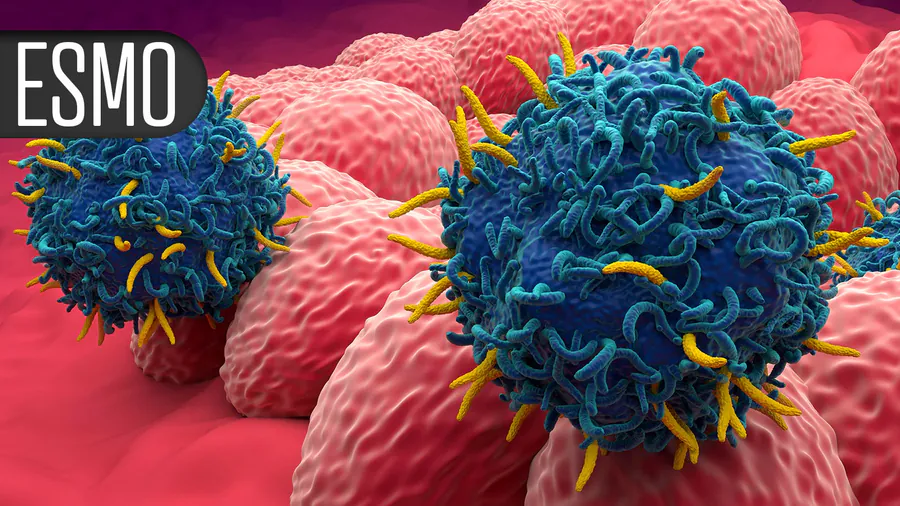
A novel drug combo is turning heads in biliary tract cancer treatment. The COMPANION-002 trial found that tovecimig — a first-in-class bispecific antibody — paired with paclitaxel tripled response rates and nearly doubled progression-free survival compared to paclitaxel alone in previously treated patients. The catch? No overall survival benefit was seen, though crossover in the trial may have muddied those results.
A new drug combination is offering a glimmer of hope for patients with advanced biliary tract cancer — one of the most aggressive and difficult-to-treat malignancy types. The phase II/III COMPANION-002 trial found that tovecimig, a first-in-class bispecific antibody targeting VEGF-A and DLL4, combined with paclitaxel, significantly outperformed paclitaxel alone in previously treated patients, meeting its primary endpoint on response rate.
Despite the encouraging efficacy signals, the combination did not improve overall survival (OS) — 8.9 months vs. 9.4 months with paclitaxel alone. Researchers suggest that the 54% crossover rate from the control arm may have confounded OS results, with crossover patients showing notably better survival (12.8 vs. 6.1 months).
By the Numbers:
Why it matters: Biliary tract cancers carry a grim prognosis, with a median OS of ~12 months in advanced disease and very limited second-line options. While tovecimig hasn't yet cleared the OS bar, its clinical activity in a high-unmet-need setting has experts calling for formal guideline review.