Turn on cookies to sign in
Signing in saves your progress to your Curie account. We can only do that with cookies on — turn them on to continue.
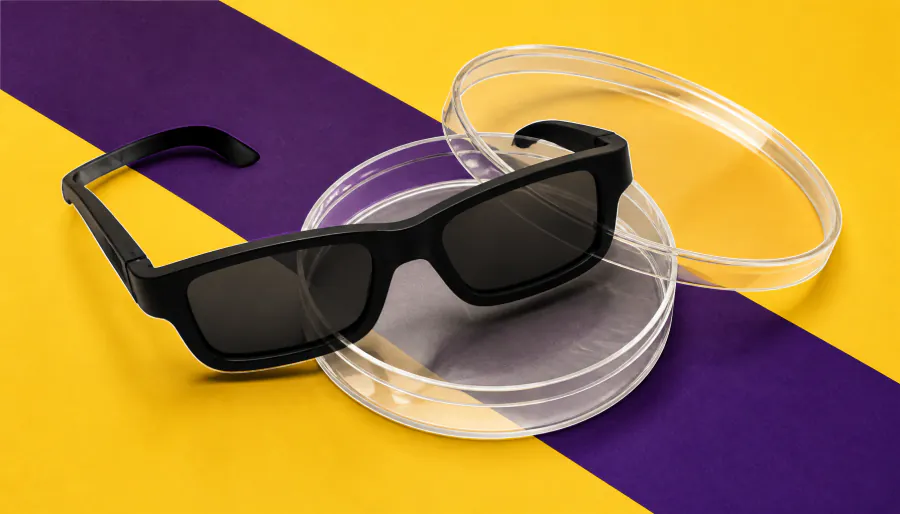
Detecting mirror life before it's too late: Researchers from the University of Strathclyde and Durham University have proposed the first method to detect "mirror life" — hypothetical organisms built from molecularly reversed building blocks. Using polarized light technology similar to 3D movie glasses, specialized fluorescent probes could serve as an early warning system for a biological threat that doesn't yet exist but could be catastrophic if it ever did.
Detecting mirror life before it's too late
Scientists have proposed the first-ever detection method for "mirror life" — a hypothetical form of life built from molecules that are reversed versions of those found in all known living organisms. Researchers from the University of Strathclyde and Durham University say their technique could distinguish conventional organisms from mirror-image counterparts long before such a threat materializes.
The method relies on circularly polarized luminescence (CPL) — the same polarized light principle behind modern 3D cinema glasses. Specialized fluorescent probes would attach to structures inside cells and emit distinct light signals based on molecular "handedness" (chirality), effectively creating a molecular fingerprint to tell ordinary life from its mirror-image equivalent.
Quick Facts:
Why it matters: If mirror life were ever artificially created, it could evade natural biological defenses and interact unpredictably with Earth's ecosystems. Developing detection tools now — before the threat exists — gives scientists, governments, and health systems a critical head start.