Turn on cookies to sign in
Signing in saves your progress to your Curie account. We can only do that with cookies on — turn them on to continue.

Good news for women managing menopause symptoms: elinzanetant (Lynkuet), a non-hormonal hot flash drug taken at bedtime, doesn't cause next-day sleepiness — and may actually improve it. A pooled post-hoc analysis of two phase III trials found the drug reduced daytime sleepiness scores over 12 weeks, with the biggest gains in the morning. A separate meta-analysis confirmed NK-receptor antagonists improve sleep as early as four weeks.
Women taking elinzanetant (Lynkuet) for menopause-related hot flashes can rest easy — literally. A pooled post-hoc analysis of the OASIS I and II phase III trials found that the FDA-approved, non-hormonal dual NK1/NK3 receptor antagonist, taken at bedtime, did not cause residual daytime sleepiness. In fact, it improved sleepiness scores across the day over 12 weeks, with the most notable gains in the morning.
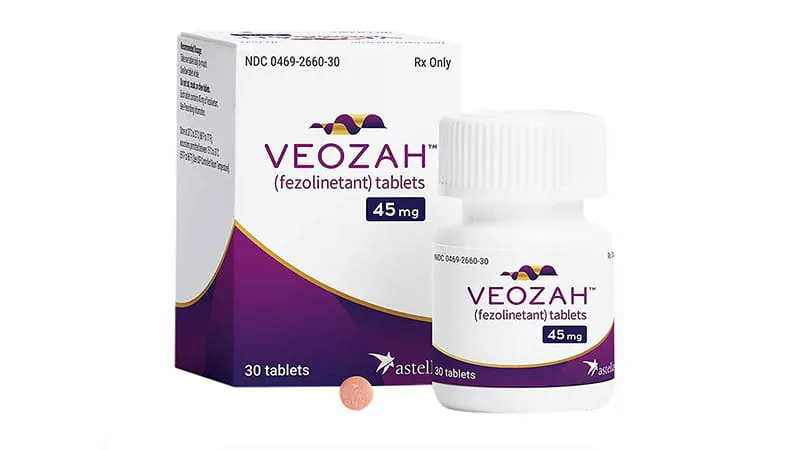
A complementary meta-analysis of seven placebo-controlled trials (3,184 women total) reinforced these findings, showing that NK-receptor antagonists — including both elinzanetant and fezolinetant (Veozah) — significantly improved sleep disturbances in menopausal women as early as four weeks, with benefits sustained through 24 weeks. Elinzanetant showed a greater magnitude of sleep benefit compared to fezolinetant at both 4 and 12 weeks.
By the Numbers:
Why it matters: For the many women who can't or won't use hormone therapy, these findings offer reassurance that non-hormonal options can meaningfully improve sleep — a top menopause complaint — without the trade-off of daytime impairment.