Curie Brief
Turn on cookies to sign in
Signing in saves your progress to your Curie account. We can only do that with cookies on — turn them on to continue.
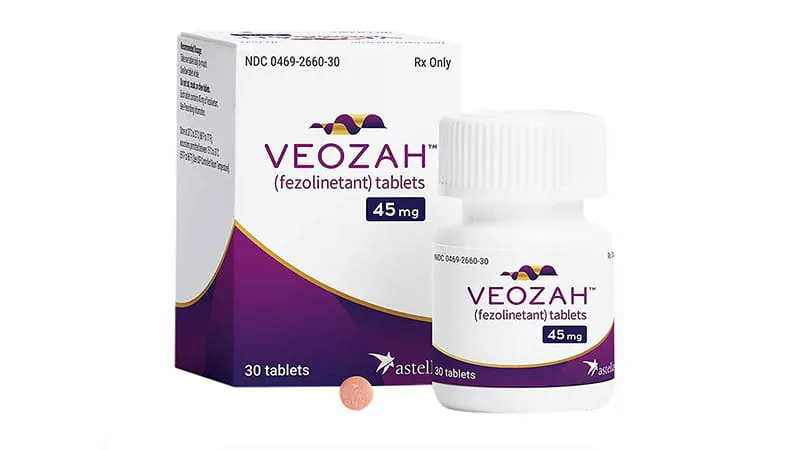
The nonhormonal menopause drug fezolinetant (Veozah) isn't just cooling down hot flashes — it's also lifting moods. A real-world phase 4 study found significant improvements in vasomotor symptoms, depression, and anxiety as early as 4 weeks into treatment. The findings, presented at The Menopause Society 2026 Annual Meeting, add to growing evidence that this neurokinin-targeting drug delivers benefits beyond its original indication.
The nonhormonal menopause drug fezolinetant (Veozah) is making waves beyond its primary purpose. Real-world data from the OPTION-VMS phase 4 study, presented at The Menopause Society 2026 Annual Meeting, show that women taking fezolinetant experienced significant improvements in hot flashes, depression, and anxiety — all within just 4 weeks of starting treatment. That's notably faster than the 6+ weeks typically needed to see results with traditional antidepressants.
The study enrolled 993 women aged 40–75, the majority of whom had moderate-to-severe vasomotor symptoms. Fezolinetant users saw meaningful reductions in depression scores (PHQ-9 change: -3.04) and anxiety scores (GAD-7 change: -2.44) by week 12. SSRIs/SNRIs and other nonhormonal therapies also improved mood symptoms, though fezolinetant's speed of action stood out.
Key Takeaways:
Why it matters: For the millions of menopausal women managing hot flashes alongside mood disorders, fezolinetant's multi-symptom benefits — delivered quickly and without hormones — could meaningfully reshape treatment conversations in women's health.