Curie Brief
Turn on cookies to sign in
Signing in saves your progress to your Curie account. We can only do that with cookies on — turn them on to continue.

For menopausal women who can't or don't want hormone therapy, there's good news on the sleep front. A new meta-analysis found that neurokinin (NK)-receptor antagonists — including fezolinetant and elinzanetant — significantly improved sleep disturbances in women with moderate-to-severe vasomotor symptoms, with benefits appearing as early as 4 weeks and sustained through 24 weeks.
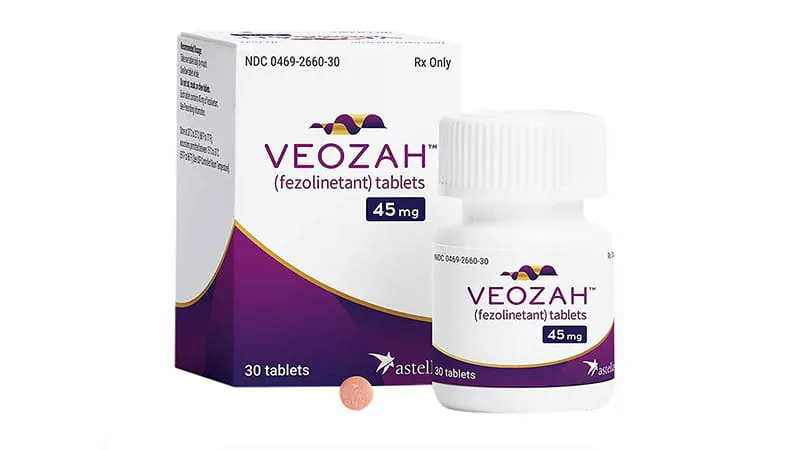
For menopausal women who can't or don't want hormone therapy, there's good news on the sleep front. A new meta-analysis of seven randomized controlled trials found that neurokinin (NK)-receptor antagonists — fezolinetant (Veozah) and elinzanetant (Lynkuet) — significantly improved sleep disturbances in women with moderate-to-severe vasomotor symptoms, with benefits appearing as early as 4 weeks and sustained through 24 weeks.
Both drugs work by targeting the brain's thermoregulation center, helping reduce hot flashes and the sleep disruption that often comes with them. Subgroup analyses showed elinzanetant had a greater magnitude of effect than fezolinetant at both 4 and 12 weeks, though head-to-head trials are still needed to draw firm comparisons.
By the Numbers:
Why it matters: Poor sleep is often the most bothersome vasomotor symptom for menopausal women, and many are unable or unwilling to use hormone therapy. These findings give clinicians a well-supported, non-hormonal option to address both hot flashes and sleep quality simultaneously.