Curie Brief
Turn on cookies to sign in
Signing in saves your progress to your Curie account. We can only do that with cookies on — turn them on to continue.
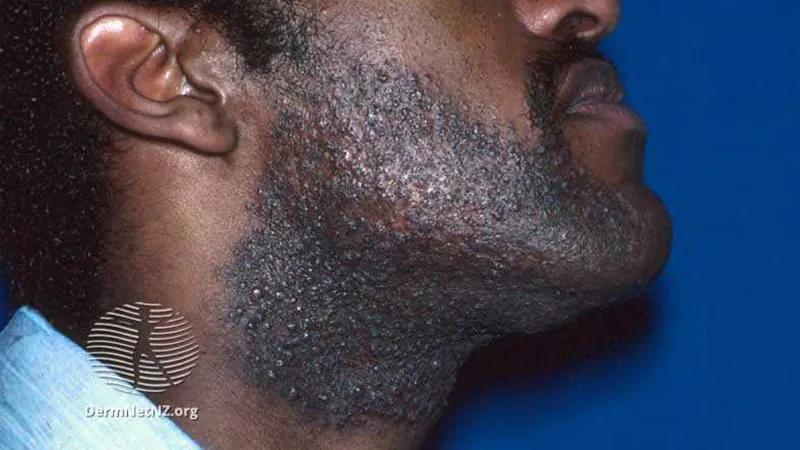
Pseudofolliculitis barbae (PFB), the chronic inflammatory skin condition commonly known as "razor bumps," has its first-ever consensus guidelines, published in JAMA Dermatology. The recommendations cover diagnosis, hair removal techniques, topical and systemic treatments, and laser therapy — with a particular focus on Black patients, who are disproportionately affected. Experts say the guidance is "long overdue" for a condition that can cause real pain, scarring, and career consequences.
For the first time, dermatologists have a formal roadmap for managing pseudofolliculitis barbae (PFB) — the chronic inflammatory skin condition better known as "razor bumps." A consensus statement published in JAMA Dermatology, based on a three-round Delphi study conducted between November 2025 and February 2026, outlines 40 agreed-upon recommendations covering diagnosis, behavioral modification, topical and systemic therapy, laser treatment, and occupational considerations.
PFB occurs when curved, shaved hairs re-enter the skin, triggering a foreign-body inflammatory response that can lead to painful papules, pustules, hyperpigmentation, and scarring. It disproportionately affects Black men — an estimated 5 million in the US — and carries significant psychosocial and professional consequences, including career setbacks for military service members who require shaving waivers.
Key Takeaways:
Why it matters: With an estimated 16,300 military members potentially needing shaving waivers and Black veterans comprising 73% of VHA-diagnosed PFB cases, these guidelines arrive at a critical moment — offering clinicians long-needed, evidence-based direction for a condition that has been chronically underrecognized and undertreated.