Curie Brief
Turn on cookies to sign in
Signing in saves your progress to your Curie account. We can only do that with cookies on — turn them on to continue.
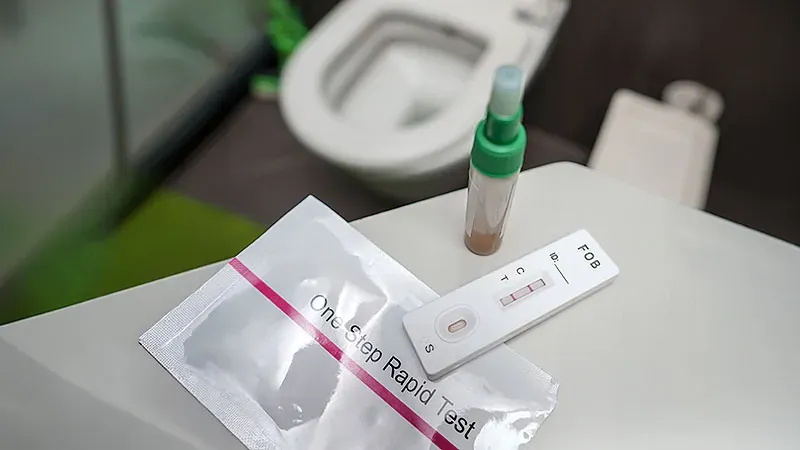
Participation is everything when it comes to colorectal cancer (CRC) screening. Two major studies show that being invited to screen cuts CRC deaths by ~26%, but actually completing the test drives that reduction to 43–50%. The takeaway for clinicians: getting patients to follow through — and act on positive results — may be one of the most powerful tools against CRC mortality.
Colorectal cancer screening works — but the real gains only come when patients participate. A large Swedish prospective cohort study of over 376,000 individuals found that an invitation to fecal occult blood screening reduced CRC mortality by 26%, while actual participation pushed that reduction to 43%. Researchers emphasized that this benefit was observed under real-world conditions, not a tightly controlled trial, making the findings especially meaningful.
A separate 21-year retrospective study from Spain's Basque Country reinforced the message. Following the rollout of a biennial FIT-based screening program in 2009, CRC mortality among adults aged 50–69 fell by 50%, with a clear inflection point appearing just 3 years after screening began. Notably, 70.8% of screen-detected cancers were caught at stage I or II — when treatment is most effective.
By the Numbers
Why it matters: These findings send a clear signal to clinicians and policymakers alike: the test itself isn't enough — organized outreach, follow-up reminders, and ensuring colonoscopy completion after a positive result are what turn a screening program into a life-saving intervention.