Curie Brief
Turn on cookies to sign in
Signing in saves your progress to your Curie account. We can only do that with cookies on — turn them on to continue.
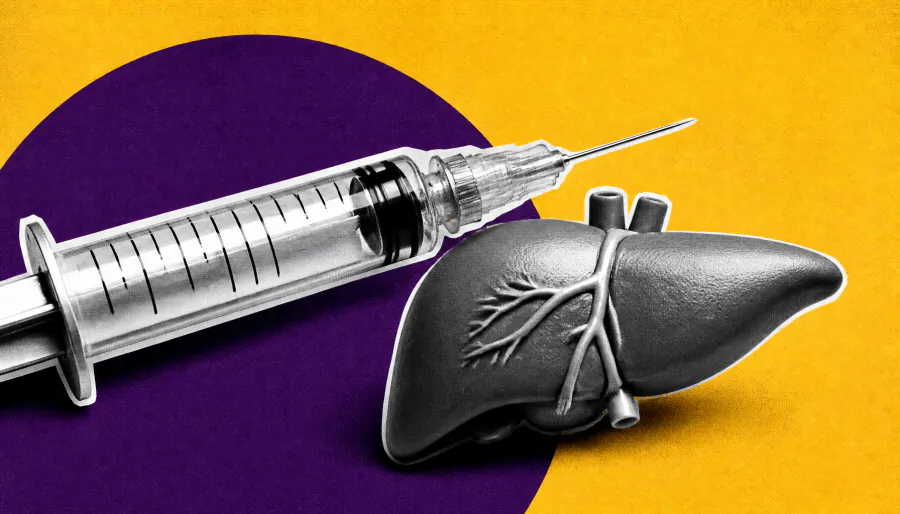
A new era in hepatitis B treatment has arrived. The FDA approved bepirovirsen (Hibsago, GSK) as the first antisense oligonucleotide therapy for chronic hepatitis B, offering eligible adults a shot at functional cure after just 6 months of treatment. In phase 3 trials, 19% of patients on bepirovirsen achieved functional cure — compared to zero on placebo.
A new era in hepatitis B treatment has arrived. The FDA has approved bepirovirsen (Hibsago, GSK) — the first antisense oligonucleotide therapy for chronic hepatitis B virus (HBV) infection. It's designed to be used alongside existing antiviral therapy in adults who've been on HBV treatment for at least 6 months, have suppressed viral levels, and have hepatitis B surface antigen (HBsAg) levels of 3,000 IU/mL or less, without cirrhosis.
The approval is based on data from the phase 3 B-Well 1 and B-Well 2 trials, where patients received subcutaneous bepirovirsen for up to 24 weeks. The results were striking: 19% of treated patients achieved functional cure, compared to none in the placebo group. Among those with HBsAg ≤1,000 IU/mL, the functional cure rate climbed to 26%. Roche's Elecsys HBsAg II quant II RxDx assay was also approved as a companion diagnostic to identify eligible patients.
By the Numbers:
Why it matters: Chronic hepatitis B typically requires lifelong antiviral therapy just to keep the virus suppressed. Bepirovirsen offers something genuinely new — the possibility of achieving lasting viral control after a finite course of treatment, a goal that has eluded clinicians for decades.