Curie Brief
Turn on cookies to sign in
Signing in saves your progress to your Curie account. We can only do that with cookies on — turn them on to continue.
An 8-week program run by advanced practice nurses significantly boosted self-efficacy and self-management in lung cancer patients after surgery — and the benefits lasted through 16 weeks. Patients in the program also reported less post-surgical pain compared to those receiving standard care. The findings highlight the real value of structured, nurse-led support in surgical oncology.
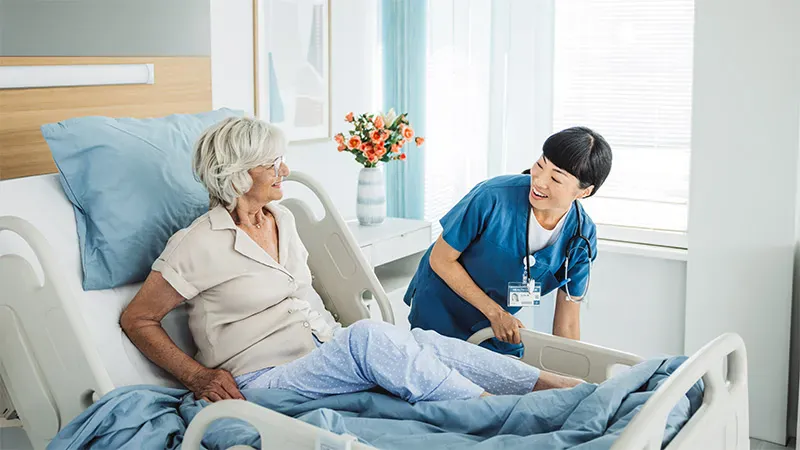
Recovering from lung cancer surgery is challenging, but a structured nurse-led program is showing patients don't have to navigate it alone. A randomized trial out of South Korea found that an 8-week program led by advanced practice nurses (APNs) significantly improved self-efficacy and self-management in patients who underwent thoracoscopic lung surgery — and those gains held strong through 16 weeks post-op.
The program included five face-to-face sessions and three phone calls, covering breathing exercises, pain management, and emotional coaching. Compared to standard care — which included an education booklet and a multidisciplinary session — the APN-led group showed notably better outcomes in managing their own recovery and reported less pain along the way.
Why it matters: Lung cancer surgery patients often struggle with recovery at home. This study suggests that a structured, nurse-led program can meaningfully improve patients' confidence and ability to manage their own care — pointing to a practical, scalable model for better surgical oncology outcomes.