Curie Brief
Turn on cookies to sign in
Signing in saves your progress to your Curie account. We can only do that with cookies on — turn them on to continue.
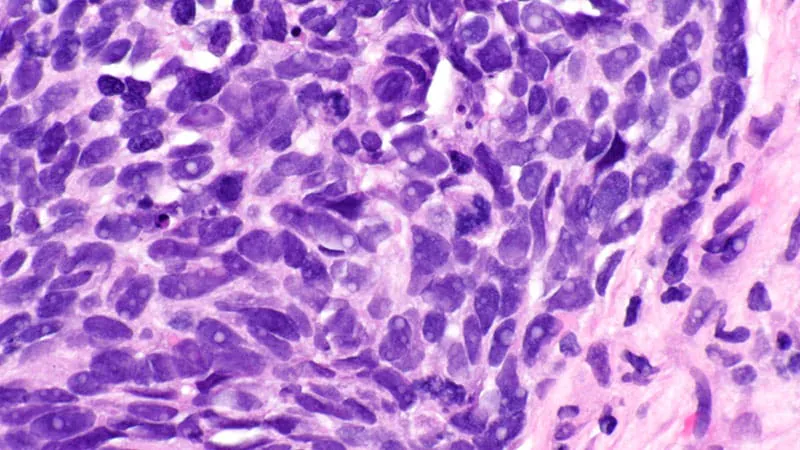
A 6-year follow-up of the I-SABR trial shows that combining nivolumab with stereotactic radiotherapy significantly improves survival in early-stage non-small cell lung cancer (NSCLC). Patients receiving the combo had a 69% overall survival rate vs. 55% with radiation alone. Experts say the results are promising, but phase 3 confirmation is still needed before changing standard practice.
A 6-year follow-up of the phase 2 I-SABR trial has found that adding the immunotherapy drug nivolumab to stereotactic ablative radiotherapy (SABR) significantly improves both overall survival (OS) and event-free survival (EFS) in patients with early-stage non-small cell lung cancer (NSCLC). The results were presented at the ASTRO 2026 Annual Meeting by researchers from UT MD Anderson Cancer Center.
While SABR is the current standard of care for inoperable early-stage NSCLC, regional and distant relapses occur in up to 42% of patients. The I-SABR trial tested whether adding four monthly doses of nivolumab could change that — and the 6-year data suggest it can, with benefits seen consistently across subgroups including younger patients, smokers, and those with varying SABR regimens.
These results offer some of the strongest evidence yet that combining immunotherapy with radiation could meaningfully extend survival in early-stage NSCLC. However, experts caution that phase 3 trial data are needed before this approach becomes standard practice, especially given potential toxicity concerns with the combination.