Curie Brief
Turn on cookies to sign in
Signing in saves your progress to your Curie account. We can only do that with cookies on — turn them on to continue.
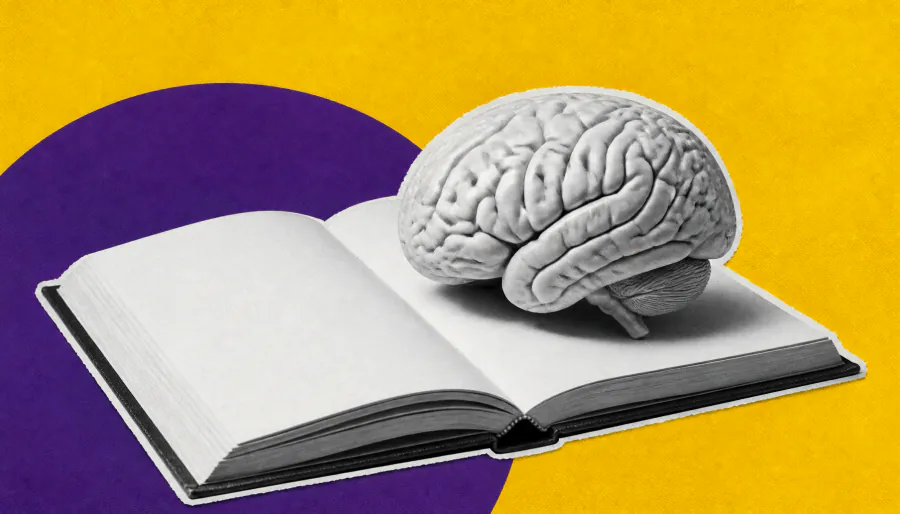
Getting older doesn't just mean losing your memory — your brain may actually be shifting its priorities. University of Arizona researchers propose the "adaptive aging hypothesis," suggesting the brain transitions from storing detailed memories to prioritizing wisdom, pattern recognition, and big-picture thinking. This could explain why older adults excel at mentoring and knowledge-sharing — and why that may be a natural evolutionary feature, not a flaw.
Forget the narrative that aging brains are simply deteriorating. Researchers at the University of Arizona are offering a new perspective with their "adaptive aging hypothesis," published in Perspectives on Psychological Science. They argue that cognitive changes in older adults aren't just losses — they reflect a natural developmental shift that prioritizes wisdom, meaning-making, and knowledge transfer over precise detail recall.
The science centers on two key brain regions. The hippocampus, responsible for storing specific memories, becomes less dominant with age. Meanwhile, the frontal cortex — which handles pattern recognition, big-picture thinking, and "gist" extraction — takes the lead. The researchers suggest this may be an evolutionary adaptation, enabling older adults to serve as mentors, teachers, and storytellers who pass accumulated knowledge to younger generations.
Importantly, the team draws a clear line between healthy aging and Alzheimer's disease, emphasizing they are biologically distinct processes — not points on the same spectrum.
Key Takeaways:
Why it matters: Reframing cognitive aging could reshape clinical approaches, reduce stigma around age-related memory changes, and open new avenues for distinguishing normal aging from early neurodegeneration.