Curie Brief
Turn on cookies to sign in
Signing in saves your progress to your Curie account. We can only do that with cookies on — turn them on to continue.
Your brain might be aging faster than you think — and the pattern depends on the condition. A massive MRI study found that Alzheimer's and mild cognitive impairment show the strongest signs of accelerated brain aging, while psychiatric disorders and addiction also leave measurable marks. Interestingly, ADHD and autism showed no significant difference compared to healthy controls.
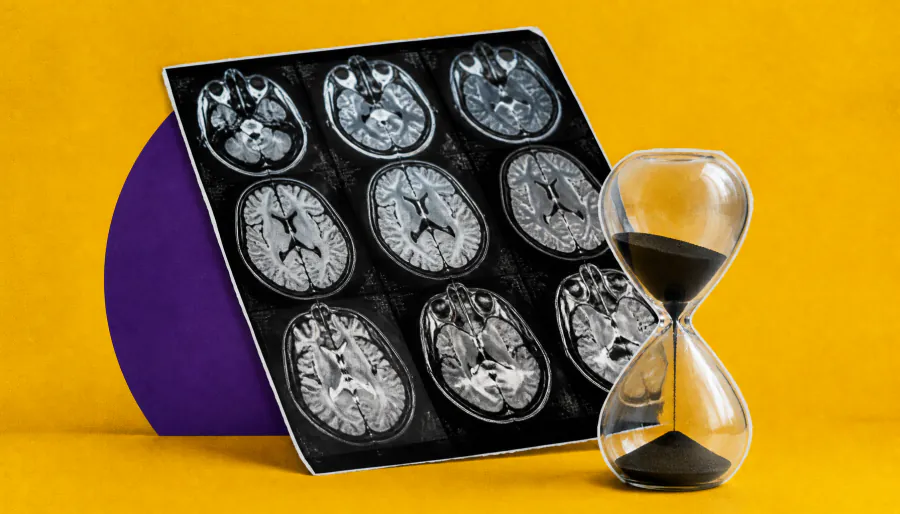
Not all brain disorders age the brain the same way — and a sweeping new MRI study is proving just that. Researchers analyzed brain scans from nearly 49,000 people and found that conditions like Alzheimer's disease, mild cognitive impairment (MCI), schizophrenia, and alcohol addiction are each associated with distinct patterns of accelerated brain aging, measured by how much older a person's brain appears compared to their actual age.
Alzheimer's and MCI topped the list with the strongest signs of premature aging, while psychiatric disorders like schizophrenia and bipolar disorder were linked to accelerated aging in the frontal and temporal lobes. Addiction showed a different fingerprint — affecting the default mode network, salience network, putamen, and thalamus. Notably, ADHD and autism spectrum disorder showed no significant overall difference from healthy controls.
By the Numbers:
Why it matters: These findings could pave the way for brain-aging biomarkers that help clinicians detect and differentiate neurological and psychiatric conditions earlier — potentially opening new doors for diagnosis and targeted treatment strategies.