Curie Brief
Turn on cookies to sign in
Signing in saves your progress to your Curie account. We can only do that with cookies on — turn them on to continue.
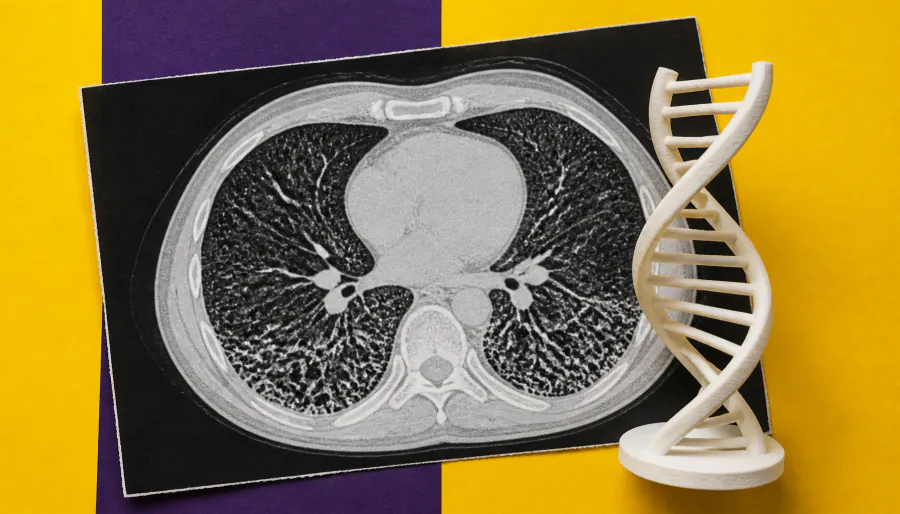
Shorter telomeres point to a distinct fibrosis pattern in ILD. New research found that interstitial lung disease patients with shorter telomeres were more likely to show a usual interstitial pneumonia (UIP) pattern on CT imaging — but not more overall fibrosis. The finding suggests telomere disorders may shape how the lung scars, not just how much, potentially guiding more targeted treatment strategies.
Researchers studying interstitial lung disease (ILD) have found a notable link between shorter telomere length and a specific pattern of lung scarring. Among 454 patients in the Pulmonary Fibrosis Foundation Patient Registry, those with age-adjusted telomere length below the 10th percentile were significantly more likely to show a usual interstitial pneumonia (UIP) pattern on CT imaging — a hallmark of idiopathic pulmonary fibrosis (IPF).
Crucially, shorter telomeres were not associated with a greater extent of fibrosis overall — only with the pattern. This distinction matters because it suggests telomere disorders may drive specific pathobiological changes in the lung rather than simply accelerating general scarring, pointing toward more targeted, UIP-focused treatment approaches for this patient subset.
By the Numbers
Why it matters: These findings could reshape how clinicians screen for telomere disorders in pulmonary fibrosis. Rather than relying solely on genetic testing, CT imaging metrics like the MIL-UIP score may help identify patients most likely to have a telomere disorder — and who might benefit most from UIP-targeted therapies.