Curie Brief
Turn on cookies to sign in
Signing in saves your progress to your Curie account. We can only do that with cookies on — turn them on to continue.
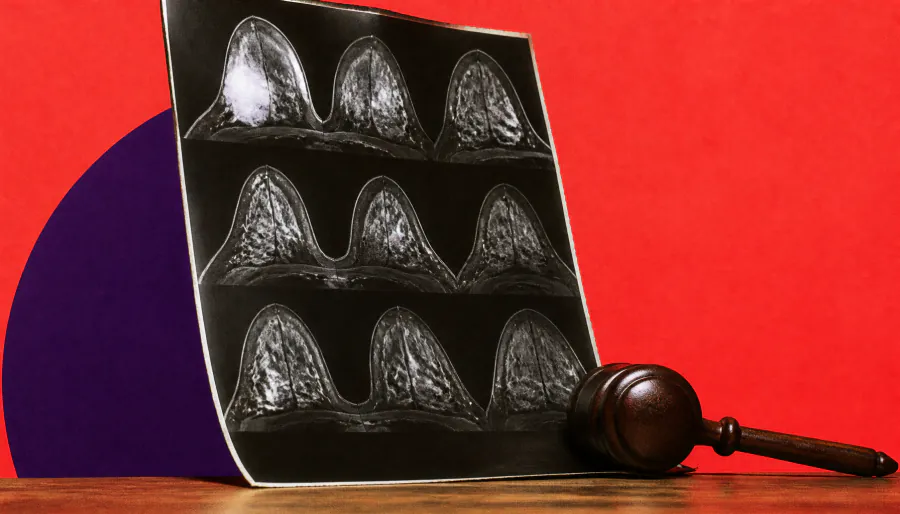
A new AI tool called TumorSight Risk just got the FDA's green light — and it could change how doctors assess breast cancer recurrence. The software analyzes routine breast MRI data to estimate 5- and 10-year recurrence-free survival in patients with HR+, HER2– breast cancer, no extra procedures needed. In a study of over 2,100 patients, high-risk patients were nearly 3x more likely to experience recurrence than low-risk patients.
The FDA has granted 510(k) clearance to TumorSight Risk, making it the first AI-powered, MRI-derived tool for estimating breast cancer recurrence risk. Developed by SimBioSys, the software analyzes routine breast MRI scans alongside pathology and clinical data to generate a recurrence-free survival (RFS) estimate for adult patients with hormone receptor–positive, HER2-negative stage I to IIIA breast cancer — no additional procedures, tissue shipment, or specialized hardware required.
The tool uses spatial AI modeling to assess tumor characteristics and surrounding tissue context, delivering a score from 0 to 100 (categorized as low, intermediate, or high risk) via a cloud-based platform — and results are available before surgery within standard clinical workflows.
By the Numbers:
Why it matters: Accurate, non-invasive recurrence risk assessment can help oncologists personalize treatment decisions — potentially sparing low-risk patients from unnecessary therapy while ensuring high-risk patients receive more aggressive intervention. TumorSight Risk adds a powerful prognostic layer to standard clinical tools, independent of therapy and pathologic data.