Curie Brief
Turn on cookies to sign in
Signing in saves your progress to your Curie account. We can only do that with cookies on — turn them on to continue.
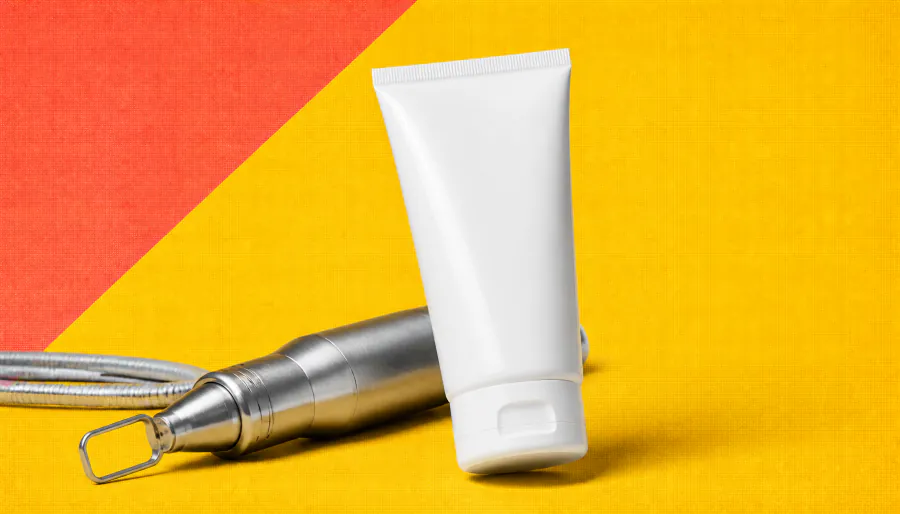
Laser therapy shows no added benefit for breast cancer survivors. A randomized trial found that carbon dioxide laser therapy performed no better than sham laser treatment in improving sexual function or vaginal health in breast cancer survivors on aromatase inhibitors. Notably, both groups saw meaningful improvement — likely driven by first-line therapies like moisturizers and lubricants provided to all participants.
Despite growing popularity, carbon dioxide laser therapy (CLT) offers no added benefit over sham laser treatment for relieving genitourinary syndrome of menopause (GSM) in breast cancer survivors on aromatase inhibitors (AIs), according to a secondary analysis of the LIGHT trial published in JAMA Network Open.
The study enrolled 84 sexually active women (or those interested in future sexual activity) who were randomly assigned to 5 monthly sessions of either fractional CLT or sham laser therapy. All participants also received first-line care — nonhormonal moisturizers, lubricants, and vibrators. At 12 months, there were no significant differences between groups in sexual function scores, dyspareunia, body image, quality of life, vaginal pH, or vaginal elasticity. Interestingly, both groups showed meaningful overall improvement in sexual function from baseline, suggesting that first-line therapies — not the laser — may be driving the gains.
By the Numbers
Why it matters: With laser therapy increasingly marketed to breast cancer survivors struggling with GSM, this trial is a timely reminder that more expensive or high-tech interventions don't always outperform simpler, evidence-based first-line care. Researchers are calling for larger trials with a biopsychosocial lens before laser therapy earns a broader clinical endorsement.