Curie Brief
Turn on cookies to sign in
Signing in saves your progress to your Curie account. We can only do that with cookies on — turn them on to continue.
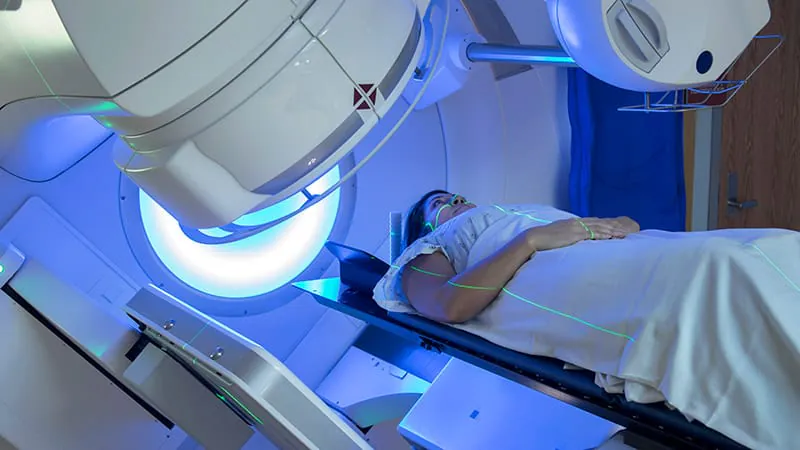
A phase II/III trial found that adding metastasis-directed ablation to standard systemic therapy did not improve progression-free or overall survival in oligometastatic breast cancer patients. Two-year overall survival was 88.4% with systemic therapy alone versus 78% with ablation. Researchers conclude ablation should not be routinely used alongside first-line treatment outside of symptom control or clinical trials.
A closely watched clinical trial has delivered a sobering verdict for a growing treatment trend: adding metastasis-directed ablation — using stereotactic body radiation therapy (SBRT) or surgery — to first-line systemic therapy did not improve outcomes for patients with oligometastatic breast cancer. The phase II/III NRG-BR002 trial enrolled 125 patients with four or fewer metastases and found no meaningful benefit from ablation, prompting the trial to stop before advancing to phase 3.
The results were notable. At a median follow-up of nearly 2.5 years, progression-free survival was slightly longer without ablation (23 months vs. 19.5 months), and 2-year overall survival was lower in the ablation arm. An exploratory finding did hint that patients with low or absent circulating tumor cells (CTCs) before treatment may benefit from ablation — but this requires further investigation.
By the Numbers:
Why it matters: Metastasis-directed ablation has been gaining traction in oncology despite limited evidence. This trial suggests the approach carries real risks — including toxicity and increased healthcare costs — without a proven survival benefit, and should be reserved for palliative symptom control or clinical trial settings.