Curie Brief
Turn on cookies to sign in
Signing in saves your progress to your Curie account. We can only do that with cookies on — turn them on to continue.
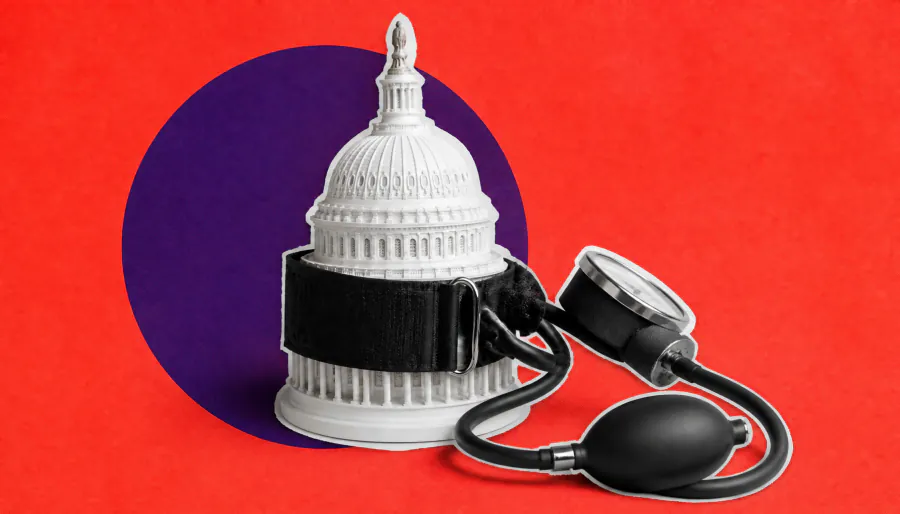
The American Heart Association has released a science advisory laying out a comprehensive framework to improve blood pressure control across the U.S. With nearly half of American adults living with hypertension and fewer than 1 in 4 having it under control, the AHA is calling for coordinated investment across research, policy, education, clinical care, and community programs to close the gap.
The American Heart Association (AHA) has published a science advisory in Hypertension outlining a structured "logic model" framework to tackle the country's persistently poor blood pressure (BP) control rates. Despite effective treatments and strong clinical guidelines, only about 20.7% of the estimated 122.4 million U.S. adults with hypertension have their BP under control — a gap the AHA says is largely about consistent care delivery and reaching the most affected populations.
The framework identifies four core investment domains: research and policy, education, clinical care, and community and workplace. Each domain is mapped to specific outputs — from professional training programs and clinical toolkits to culturally appropriate public education campaigns and community partnership programs — with the goal of driving measurable short-, medium-, and long-term improvements in population-level BP control. Lead author Dr. Yvonne Commodore-Mensah emphasized that no single intervention will close the BP control gap, pointing to social determinants like medication costs, food insecurity, and transportation as critical barriers.
By the Numbers:
Why it matters: Uncontrolled hypertension is a leading driver of cardiovascular disease and mortality. This AHA framework gives health systems, policymakers, and community organizations a shared roadmap to coordinate efforts — and measure progress — in ways that could meaningfully reduce disparities and CV events at scale.