Curie Brief
Turn on cookies to sign in
Signing in saves your progress to your Curie account. We can only do that with cookies on — turn them on to continue.
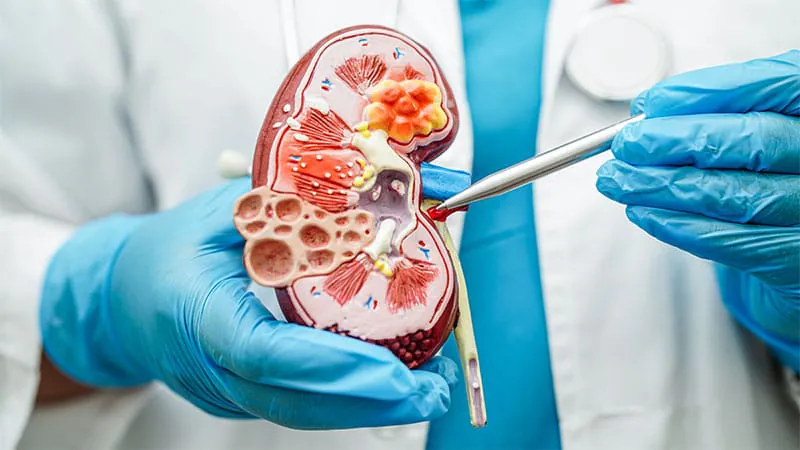
Pushing blood pressure lower pays off for the heart, but comes with a kidney caveat. A large meta-analysis of 27 trials and nearly 89,000 patients found that intensive BP lowering cut cardiovascular events by 15% per 10-mm Hg systolic reduction — in people with and without chronic kidney disease. The catch? It also raised the risk of significant kidney function decline, though it didn't increase the risk of outright kidney failure.
Pushing blood pressure lower pays off for the heart, but comes with a kidney caveat. A major meta-analysis published in JAMA Cardiology pooled data from 27 randomized trials and nearly 89,000 participants to compare intensive vs. standard blood pressure (BP) lowering. The verdict: intensive treatment reduced the risk of major cardiovascular events by 15% for every 10-mm Hg drop in systolic BP — and this benefit held equally for people with and without chronic kidney disease (CKD).
On the kidney side, the news is mixed. Intensive BP control did not increase the risk of kidney failure, which is reassuring. However, it was tied to a 42–47% higher risk of a sustained, significant drop in kidney filtration function (eGFR), regardless of CKD status. Researchers also found an 11% lower risk of all-cause mortality with intensive treatment.
By the Numbers:
Why it matters: These findings support pushing BP targets lower across the board — but clinicians should pair aggressive treatment with close kidney function monitoring to catch early declines before they become a bigger problem.