Curie Brief
Turn on cookies to sign in
Signing in saves your progress to your Curie account. We can only do that with cookies on — turn them on to continue.
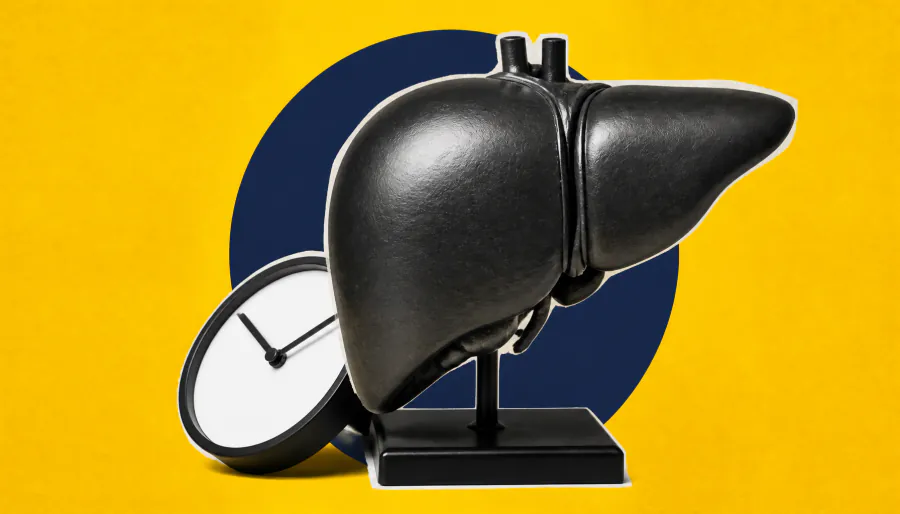
That late-night snack may be doing more damage than you think. A large study of nearly 200,000 people found that regularly eating after dinner or around bedtime is linked to a 20%–30% higher risk of fatty liver disease and cirrhosis. Researchers say the culprit may be your liver's internal clock — and simply eating earlier could help.
That late-night snack may be doing more damage than you think. Researchers at Oregon Health & Science University (OHSU) analyzed data from nearly 200,000 participants across three major nationwide studies and found that people who regularly ate after dinner or around bedtime had a 20%–30% higher risk of developing liver disease — including fatty liver disease (metabolic dysfunction-associated steatotic liver disease) and cirrhosis — compared to those who avoided late-night eating. The findings were published in Clinical Gastroenterology and Hepatology.
The likely mechanism? Your liver's internal clock. The liver is highly sensitive to circadian rhythms, regulating nutrient processing, blood sugar, and energy storage. Eating when the body is biologically winding down for sleep may disrupt these processes, impairing metabolic efficiency and promoting fat accumulation over time — a pattern also observed in night shift workers.
By the Numbers:
Why it matters: This study adds to growing evidence that when you eat matters as much as what you eat. For the roughly 30% of Americans with fatty liver disease, shifting meal timing earlier — without overhauling diet — could be a practical, low-barrier intervention worth exploring.