Curie Brief
Turn on cookies to sign in
Signing in saves your progress to your Curie account. We can only do that with cookies on — turn them on to continue.
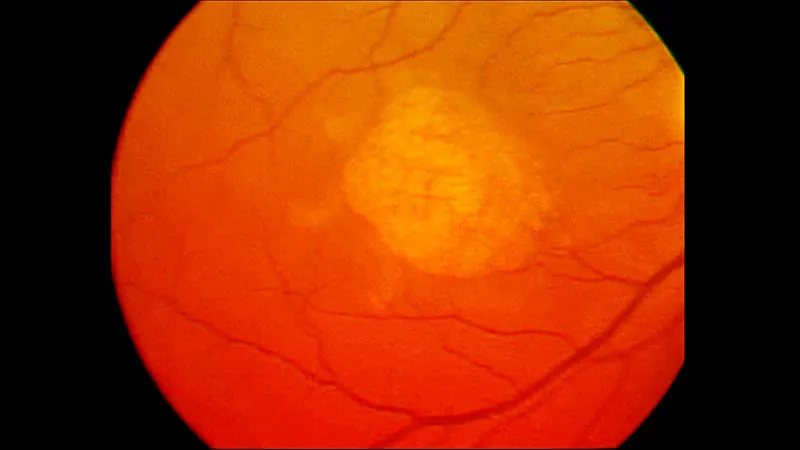
Got varicose veins? Your eyes may be at risk too. A large retrospective study found that patients with varicose veins were about twice as likely to develop central serous chorioretinopathy (CSC) — a condition where fluid accumulates under the retina. The link held even after accounting for steroid use and other known risk factors, pointing to shared vascular pathways between the two conditions.
A large retrospective study analyzing electronic health records from a global network found that patients with varicose veins were roughly twice as likely to later be diagnosed with central serous chorioretinopathy (CSC) — a condition where fluid builds up beneath the retina, potentially threatening vision. The association held even after excluding patients with glucocorticoid use (a known CSC trigger) and controlling for hypertension, sleep apnea, and healthcare utilization.
Researchers from Stanford's Byers Eye Institute analyzed over 621,000 patients with varicose veins and an equal number of matched controls. The findings suggest that systemic venous dysfunction — not just steroid exposure — may play a meaningful role in CSC development, possibly through shared endothelial (blood vessel lining) pathways.
This study opens the door to viewing CSC as part of a broader systemic vascular disease rather than an isolated eye condition. For clinicians, it suggests that patients presenting with varicose veins may warrant closer ophthalmologic monitoring — and vice versa.