Curie Brief
Turn on cookies to sign in
Signing in saves your progress to your Curie account. We can only do that with cookies on — turn them on to continue.
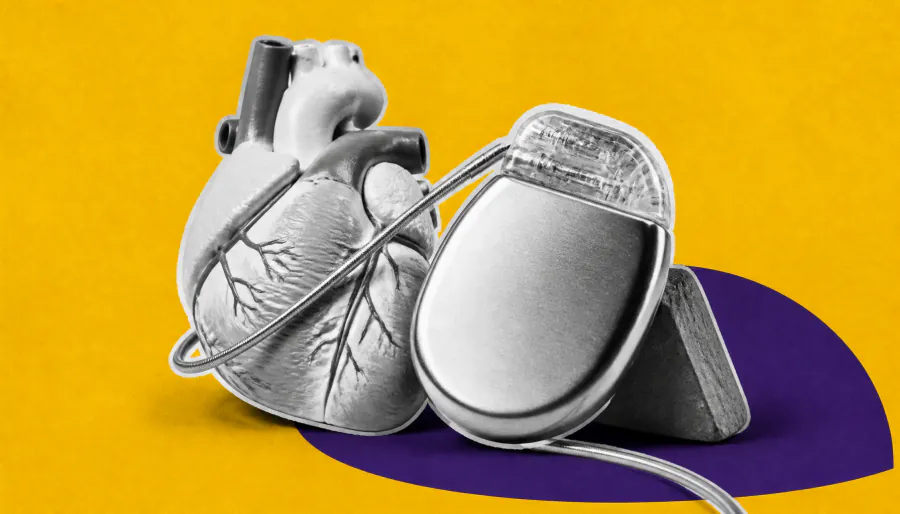
A real-world registry shows baroreflex activation therapy (Barostim) is widely used off-label in heart failure patients — and it's working. Data from the REBALANCE study found improved heart function and survival rates that beat model predictions, regardless of whether patients met the FDA's approved criteria. The therapy also showed a strong safety profile, with serious adverse events in just 1.4% of patients.
Real-world data from the REBALANCE registry suggest that baroreflex activation therapy (BAT) — a device-based treatment that electrically stimulates carotid baroreceptors to rebalance the autonomic nervous system — is delivering meaningful benefits even in heart failure (HF) patients who fall outside its current FDA indication. Presented at the Heart Failure Society of America Annual Scientific Meeting, the findings offer encouraging evidence for broader use of the Barostim device.
Of the 435 patients enrolled across 45 U.S. centers, 45% were using BAT off-label. Yet both on- and off-label groups saw similar improvements in NYHA functional class and left ventricular ejection fraction (LVEF), with 53% of patients achieving at least a 5-percentage-point LVEF gain at 12 months. A notable bidirectional blood pressure response was also observed — patients with low baseline systolic BP saw increases, while those with higher baseline BP saw reductions.
By the Numbers:
Why it matters: With nearly half of real-world BAT users falling outside the FDA label, these results provide clinicians with reassuring safety and efficacy data to support broader, evidence-informed use of the therapy in symptomatic HF patients who remain uncontrolled despite guideline-directed medical therapy.