Curie Brief
Turn on cookies to sign in
Signing in saves your progress to your Curie account. We can only do that with cookies on — turn them on to continue.
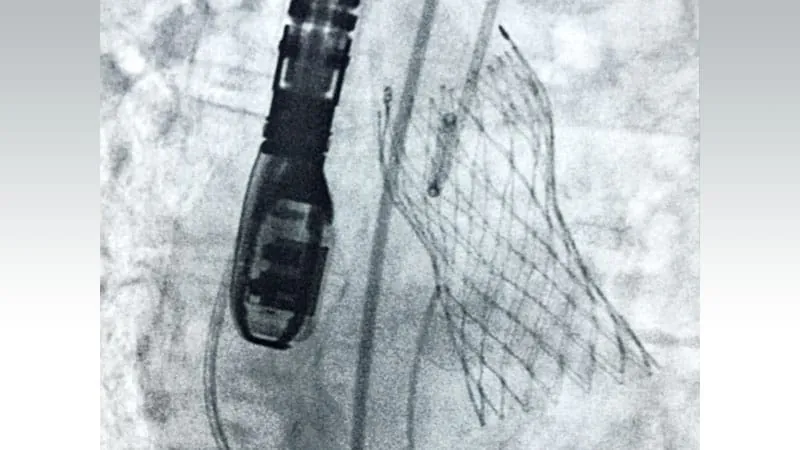
Medicare just overhauled its coverage rules for transcatheter aortic valve replacement (TAVR), and cardiologists are mostly on board — with one big caveat. The new policy loosens heart team requirements and drops hospital volume thresholds, but experts warn that financial incentives could erode the collaborative care model. The concern? Self-referral culture and private equity influence could push complex procedures into the wrong hands.
Medicare just rewrote the rules for one of cardiology's most common structural heart procedures. CMS issued a new National Coverage Determination (NCD) for TAVR following a 9-month review, lifting the "coverage with evidence development" (CED) requirement for severe symptomatic aortic stenosis — a nod to how far the technology has matured. At the same time, CMS added CED coverage for asymptomatic severe aortic stenosis, keeping evidence collection alive where the science is still evolving.
The updated policy eliminates hospital volume thresholds and relaxes heart team requirements — a single interventional cardiologist or cardiac surgeon can now evaluate and perform the procedure without the other present. Cardiologists largely welcomed the operational flexibility, but sounded alarms about what happens when financial incentives take the wheel.
Key Takeaways:
Why it matters: The shift gives programs more flexibility, but the guardrails keeping TAVR safe have always been the heart team. If financial pressures chip away at that model, patient outcomes could suffer — and whatever the U.S. does, the rest of the world tends to follow.